

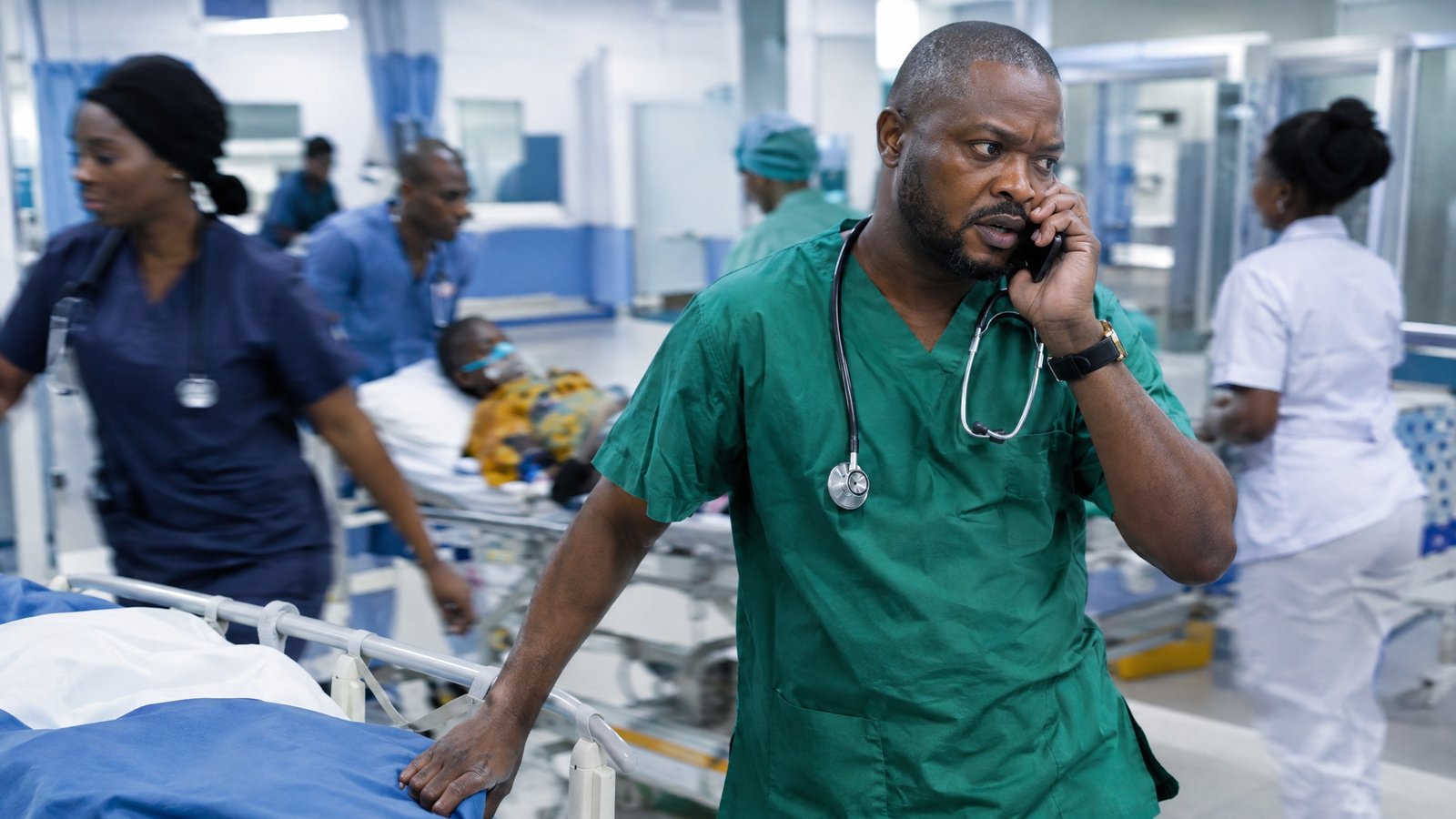
There is a particular kind of helplessness that comes with arriving at a hospital gate at 2am with a family member who cannot breathe, only to be told there is no space, no kit, or that a police report must come first. For years that was simply how things worked in Nigeria. The Senate has now moved to change it.
The upper chamber has passed a bill for second reading that would make it compulsory for public and private hospitals to provide emergency medical treatment, with penalties of up to six months in jail, a fine of up to N300,000, or both, for anyone who violates the provisions. The bill was sponsored by Senator Abdulaziz Musa Yar’Adua of Katsina Central and was referred to the Senate Committee on Health for further work, with a directive to report back within four weeks.
Before it becomes law, here is what the proposal actually says, what it leaves open, and what you can still do this month if care is refused.
What the Senate Wants Hospitals to Do
The proposal amends the National Health Act of 2014 to set emergency treatment standards and referral protocols. The timelines are specific, which is what makes this different from the broad statements of good intentions that have not moved hospital practice before.
- Triage within 15 minutes. A patient must be assessed within a quarter hour of arrival at the facility.
- Stabilisation within 30 minutes. Oxygen, intravenous fluids, pain management and initial diagnostic procedures are expected to have started by then.
- A bed within two hours for patients who need admission, subject to availability.
- Referral started within two hours and completed within three of arrival, where the receiving hospital can take the patient.
- An ambulance within 30 minutes of a referral decision, or arranged alternative transport.
- Emergency care training and certification for health workers, with recertification intervals not exceeding 18 months.
The Referral Rules Are Where Most Cases Actually Turn
Read the referral clauses closely, because they are the part that matters in practice. Where beds are unavailable, a facility is required to stabilise the patient first and then arrange transfer to another hospital, rather than simply loading the family into a taxi and pointing them at a competitor across town. A national emergency care curriculum is also expected to be built jointly by the Medical and Dental Council of Nigeria and the Nursing and Midwifery Council.
Why This Bill Is Being Pushed Now
Yar’Adua framed the amendment around preventable deaths, pointing to Nigeria’s contribution of roughly ten per cent of global maternal deaths and linking a portion of that figure to delays in accessing emergency obstetric care. The Senate Whip, Senator Mohammed Monguno of Borno North, backed the measure on road accident fatalities and maternal emergencies, and Senator Diket Plang of Plateau Central focused on rural referral chains, where a complicated delivery at a primary health centre has to move up the ladder fast.
That is a different argument from the one you hear about queueing systems in federal hospitals. The issue is not only how many patients arrive. It is how long a patient who is already dying waits before somebody with authority is legally obliged to touch them.
The Part That Worries Hospitals, and the Part That Worries You
Not everyone in the chamber was convinced, and the objections are worth taking seriously because they decide whether this law works or becomes another piece of paper. Senator Francis Faduyile of Ondo South warned against criminalising health professionals before addressing the shortage of facilities, doctors, oxygen cylinders and emergency equipment. His point was blunt: how does a doctor attending to three patients at once face criminal liability when a fourth emergency walks in?
He also noted that private providers frequently treat emergency patients without reimbursement, which means some hospitals absorb costs the state has not paid for. That is a structural grievance, not an excuse, but it is the kind of thing that decides whether a hospital fights the law or complies with it.
The Safety Valve for Doctors
The bill does contain a safety valve. Practitioners are protected from penalties when resource constraints prevent compliance, provided the challenges are properly documented and the prescribed referral procedures were followed. In other words, a doctor who has no oxygen and can show that they stabilised the patient and attempted a referral should not end up in prison for it. The documentation is what carries the weight, which is precisely why the paperwork obligation matters as much as the timelines.
The Senate Minority Leader, Senator Abba Moro of Benue South, called the debate a useful way to surface gaps in the law and welcomed a public hearing, noting that ambulance teams in Mexico often reach accident victims promptly. Akpabio closed by pushing the bill through committee stage and consultation with health professionals, while stressing that federal, state and local governments all have to fund the facilities and equipment the rules assume exist.
What To Do If You Are Still Turned Away
Nothing in this bill is in force yet, so it changes nothing about what happens at the gate tonight. What you can do has not changed either, and it is worth repeating.
- Ask for the refusal in writing. A nurse saying no leaves you nothing. A note naming the hospital, the date and the stated reason gives you something to complain with.
- Insist on stabilisation before transfer. Where a patient is too unstable to move, the ask is that they are treated where they are until they can survive the journey.
- Call the line on your phone. Lines of this kind have been recurring themes in Nigeria for years, and the infrastructure gaps discussed in our coverage of the cataract backlog in Niger State are the same problem showing up in a different clinic.
- Escalate to the state Ministry of Health. Commissioner-level offices keep records of complaints, and a documented complaint is the fastest way to get a repeat offender noticed.
For families watching a loved one deteriorate while decisions are argued out, our piece on the UCH resident doctors’ warning strike shows how quickly a hospital’s ordinary operations can seize up when the pressure lands on the people doing the actual work.
How Likely Is This To Become Law?
Second reading is the easy part. The hard part is the public hearing and the committee stage, where the Medical and Dental Council and the Nursing and Midwifery Council will push back on timelines that a hospital with three resuscitation bays and no functional oxygen plant cannot meet. Expect the final version to carry more exemptions than the current draft.
But the direction of travel is clear. Nigeria has a patient charter that already promises emergency treatment regardless of ability to pay, and the enforcement behind it has been thin. What the Senate is trying to build is the enforcement arm, with a clock attached.
One thing is already settled by the debate itself. The argument that a hospital cannot be held responsible for what its own equipment and staffing cannot support is now on the record, which means when the final law lands, the resourcing question will be answered alongside the penalty question. That is a better fight than the one most Nigerians have been having, which is the one where somebody dies in a corridor while administrators argue about whose fault it was.
While you wait, keep reading the NCDC’s weekly payment to Ebola contacts for an example of government schemes that actually reached households, and stay alert to how the health system handles money and staff when the pressure rises.
Conclusion
A bill that says treat emergencies within fifteen minutes, stabilise within thirty, and refer with a clock running is worth watching closely. It has not passed yet, it will be amended, and the resourcing gaps it exposes are real. But the direction is right, and the pressure it puts on hospital boards is the kind that produces change faster than appeals and complaints ever did.
Keep the note of refusal. Keep the receipts for every attempt to get care. And if the law passes, the story of who was treated within fifteen minutes, and who was not, will be worth following very closely on naira.blog’s health coverage.