
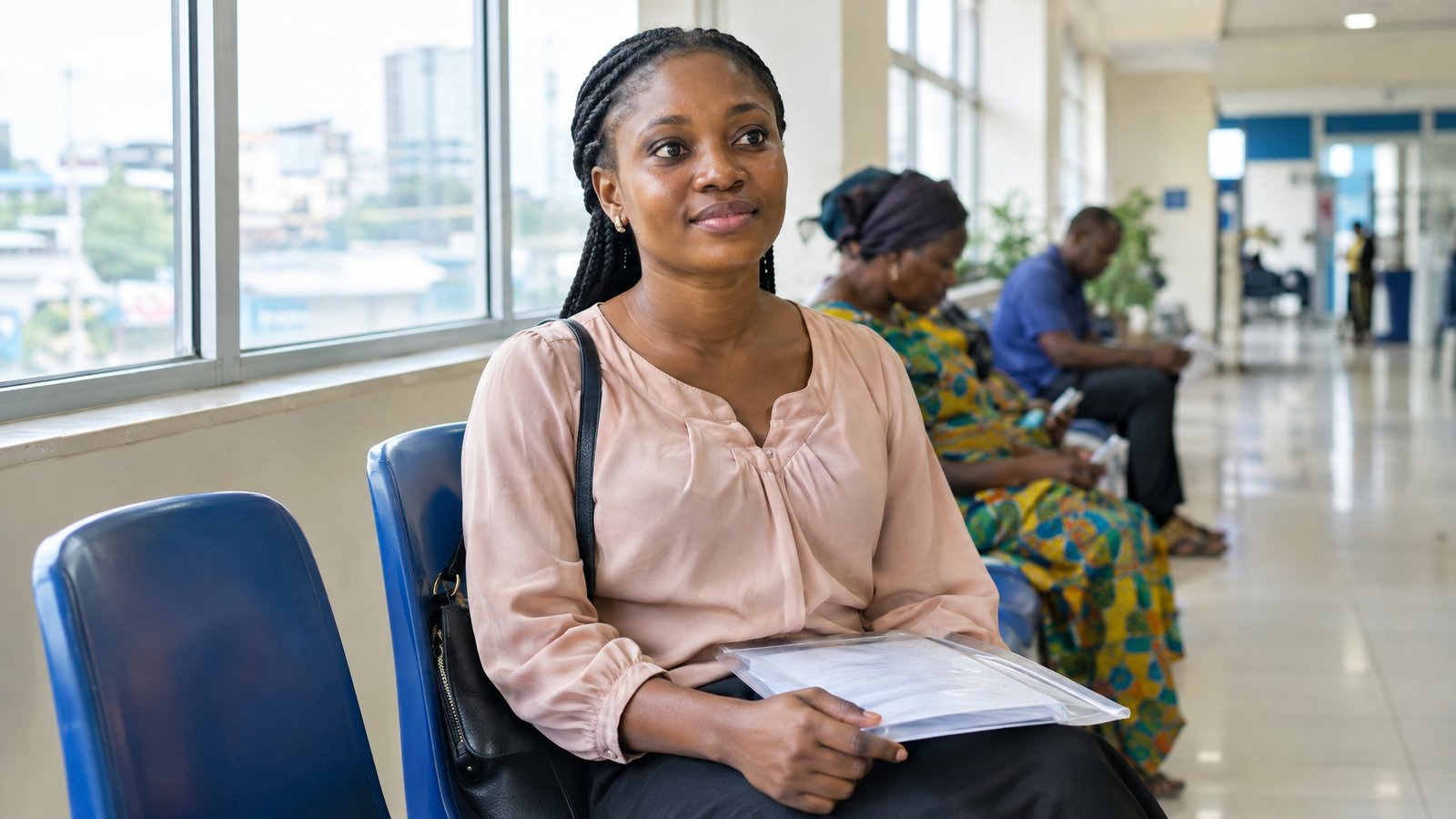
Twenty-five years is a long time to carry something that grows back every time a surgeon removes it. Nancy Chidinma has been doing exactly that since she was two years old, when an ear piercing done at birth went wrong and left behind the scar tissue that now covers part of her body and returns, stubbornly, after every attempt to cut it away.
She is 27. She has had surgery in both public and private hospitals, two years of cryotherapy, drainage procedures for recurring abscesses, and a stretch of nights where the pain does not let her sleep. She is appealing to Nigerians for N7 million to finish a treatment plan that her own consultant at the Lagos State University Teaching Hospital says will cost N8.2 million in total.
What a keloid is, and why it keeps coming back
A keloid is scar tissue that grows past the boundary of the original wound. Unlike a normal scar, which stays within the edges of the injury, a keloid keeps expanding, and it has a nasty habit of returning after surgical removal, sometimes growing back faster than it was before.
That is the loop Chidinma is trapped in. Her description of the treatment history is detailed and, in places, brutal. She has had several surgical removals that she cannot count, in general hospitals and in private ones, and each time the routine ending was the same steroid injection. She did two years of cryotherapy at a popular clinic, and she says the pain from that procedure almost paralysed the left side of her body to the point where she could not use it. The growth came back anyway.
Her last surgery was in April 2025. By the time she posted her appeal on Friday, the keloid had grown back significantly enough that she measured the growth at one year and seven months, which she described as unusually fast. Her condition has also become more aggressive, with recurring abscesses that need draining and constant pain that affects her sleep and her daily movement.
The N8.2 million treatment plan
Why the timing is not negotiable
This is where the story becomes about the health system rather than about one person, because the money is not the only obstacle.
Chidinma says a doctor recommended LASUTH earlier in the year, and she began pursuing treatment there from May. A surgery scheduled for 11 September was postponed because of industrial action. She then went back to the Burns and Plastic Surgery Unit at LASUTH, where a consultant explained the treatment that would reduce the odds of recurrence.
- Excisional surgery, which she puts at N1.2 million and says she has already raised.
- At least two radiotherapy sessions, one of which has to happen exactly 24 hours after the surgical removal and the second a few weeks later. She was told each session at LUTH costs about N2.5 million, putting the two at N5 million.
- Chemotherapy and post-operative care, which she estimates at another N2 million, covering injections, drugs and silicone creams.
Add it up and the total is N8.2 million, which leaves N7 million still to be found. A consultation and referral letter from LASUTH dated 5 November confirms she was referred to the hospital’s Nuclear Medicine Department for further management, describes her as a 27-year-old woman with multiple keloids, and records the plan as excisional surgery with post-operative radiotherapy. That letter is the document that turns a personal appeal into a clinical case, and it is dated the same day the central bank published the new stablecoin rules that now govern how ordinary Nigerians move money around. Same country, same week, two very different pictures of what it costs to get something done.
The six-month wait that was not a wait
The part that should worry policymakers more than the appeal is the timeline. Chidinma says she spent more than six months trying to get booked with LASUTH, and that the September surgery collapsed because of a strike. Then she was given a final consultation date of 19 November, with the operation to follow.
That is a six-month detour for a patient who is in pain every day and cannot work. We have written before about a 14,000-case cataract backlog in a single state, and about what an allied health workers’ strike does to hospitals, and about resident doctors suspending work and then returning. Every one of those is a system story dressed up as a labour dispute, because that is how labour disputes present themselves. The person waiting for a theatre slot is the bill.
There is also a public-health layer to this that goes beyond one woman. A keloid is not rare and it is not trivial. In a population where a significant number of people get body piercings, and where minor wounds are treated quickly but keloid-prone patients need years of follow-up, the question of whether the radiotherapy and post-operative care needed to stop recurrence is actually available is a question about the whole chain, not just about radiotherapy machines.
What the family has already carried
The arithmetic of one family’s sacrifice
Chidinma described the cost to her family in plain terms. Her parents and siblings have given up their finances every single year because of her condition. Last November, she said, her sister single-handedly took care of the bills for the procedure she had. After completing her National Youth Service Corps programme, she has had to turn down job opportunities and stay at home, because the pain and the appearance of the growth make it impossible to show up for work or run her business.
She described the daily reality without any attempt to dramatise it. Every day of her life is spent in pain. She takes painkillers like sweets, barely sleeps, and most nights she stays awake until morning because the pain becomes unbearable when it is quiet. She said reaching out was the hardest thing she has ever done, and that it was a last resort because she had exhausted every option and spent more than six months trying to get booked at LASUTH on her own.
After she posted, some users began sending money and sharing payment receipts in the comments. She gave her account details publicly and asked for any amount, because any amount would go a long way.
Conclusion
What a reader can actually do
Two things are true about this story at the same time. Chidinma is a 27-year-old Nigerian woman who has done everything right and still needs help, and the system has already failed her once by postponing surgery and again by making a repeat patient wait six months for a theatre date. Both deserve attention and only one of them can be solved with money.
For readers, the practical facts are these: her final consultation is 19 November, the surgery and radiotherapy are to follow, and the estimate she has been given is N8.2 million against a referral letter dated 5 November. If you want to help, the appeal is on her account, and the receipts people have posted in the comments are visible, so it is possible to verify that money has moved rather than take a promise for it.
For everyone else in Nigeria reading this, the uncomfortable detail is the 24-hour window. The radiotherapy session that has to happen exactly a day after the surgery is the single most delicate part of the plan, and a plan that depends on a specific date being met by a public hospital is a plan with very little slack in it. That is not a personal failing. It is what a health system looks like when the theatre list, the radiotherapy unit and the strike calendar are not in the same room.