
There is a particular kind of Nigerian argument that does not need a laboratory, a committee or a pilot project. It needs one person with a microphone and the willingness to say the thing nobody wants to say.
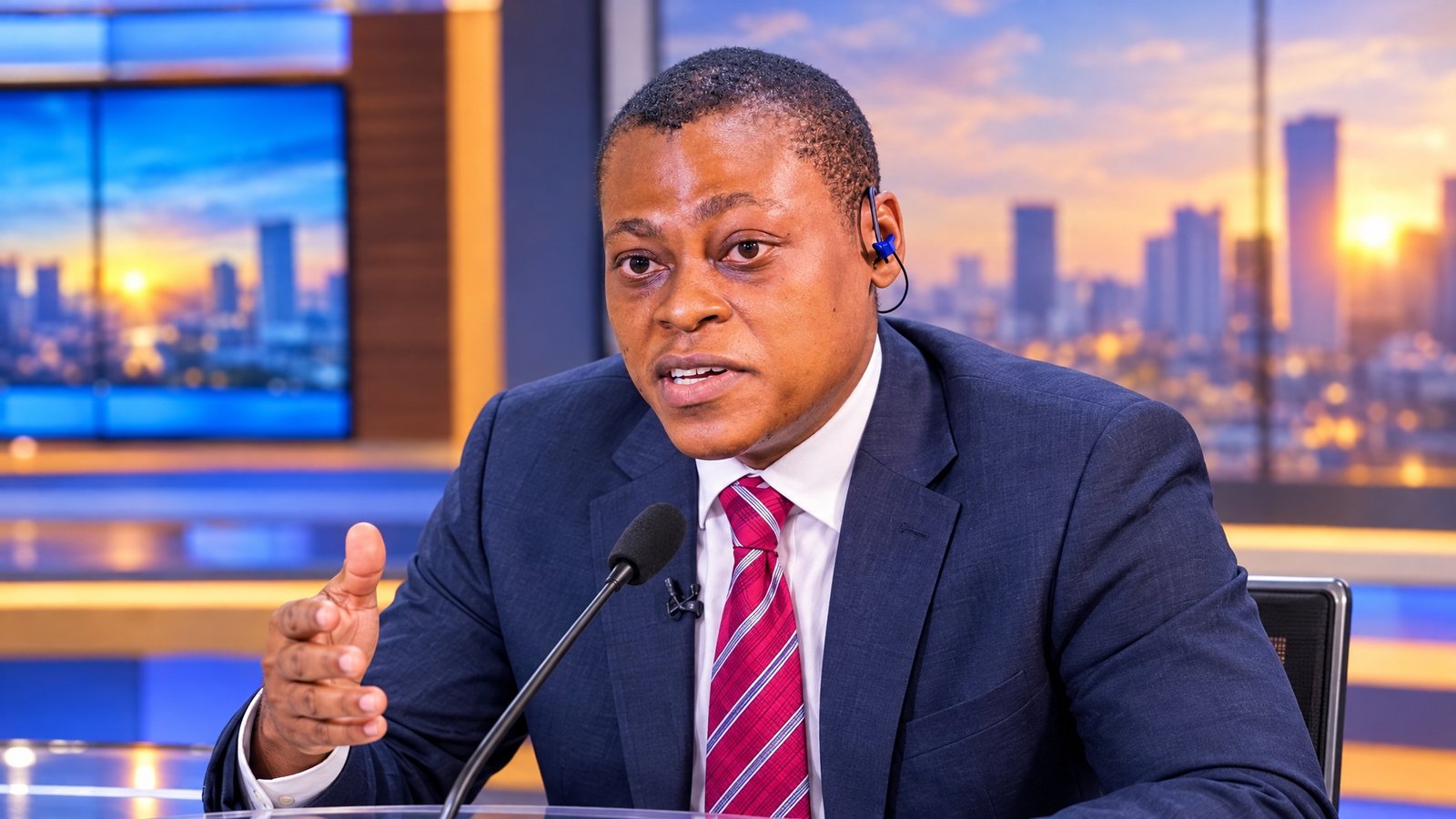
Rufai Oseni, the television presenter, spent part of Monday’s morning show dismantling the law that allows states to generate and distribute their own electricity. His conclusion was not subtle. “It will never work,” he said, and then he explained why with a sequence of questions that have left a lot of Nigerians nodding along.
Because this is not a technical argument about generation capacity alone. It is an argument about who pays, who can actually build, and what happens to a country that has spent four decades failing to fix the grid before deciding to divide it up.
The Four Questions That Do the Damage
Oseni did not begin with a lecture. He began with a list. How many states can generate power? Where is the gas? Where is the grid? Where is the money?
Each question lands on a different problem, and none of them has an easy answer sitting inside a state government house.
Electricity cannot be pronounced by law
His central point was that the idea looks good on paper but collapses on contact with reality. Generating and distributing power is not something a declaration can arrange. It needs massive funding, a reliable supply of gas, generation plants, transmission infrastructure and a distribution network, and he argued that most states have none of these in working order.
“You cannot pronounce electricity by law,” was the thrust of his argument. You can pass the law. Whether the lights come on is a different question entirely.
The Federal Government has not solved it in forty years
The sharpest comparison Oseni drew was with the national grid itself. The Federal Government has been in the power sector for more than forty years, and in that time it has struggled to generate somewhere between 4,000 and 5,000 megawatts for more than 200 million Nigerians, with grid collapse becoming a routine part of the calendar.
His question at the end was the one that stayed with the room: if the country cannot give Nigerians twenty-four hours of electricity from one centre, how does anyone intend to break it into thirty-six?
Where Will The Money Come From?
This is where the argument moves from engineering to arithmetic, and it is where it gets painful.
Oseni noted that many states currently cannot pay their workers’ salaries, and are still relying on their share of the federation account allocation just to stay afloat. Those are the same states being handed the power to generate electricity for their own populations.
He asked where they would find the billions required to build power plants and transmission lines, and what happens to the states that find nothing.
Thirty-six new problems, not thirty-six solutions
There was a second problem, and it concerns the last metre of the journey. Oseni pointed out that many distribution companies are already struggling to distribute what the Federal Government manages to generate. Handing states their own power, on his view, does not fix that final, broken link — it multiplies it.
Every new generator becomes another distribution problem, another billing dispute, another set of transformers, another set of complaints from customers who bought generators and still get no power.
What Oseni Wants Instead
The call was for the Federal Government to stop, as he put it, deceiving Nigerians with laws that cannot work. It is a demand that has been made before, including by those who have made power a central issue of the 2027 race. His priorities were straightforward and, notably, unglamorous:
- Fix the national grid.
- Fix gas supply to the generating companies.
- Fix transmission.
None of these is a headline law. All of them are closer to the actual problem. The reported additions of 640 megawatts to the national grid in Kano and Katsina show what incremental progress looks like when somebody actually addresses the network rather than reorganising the paperwork around it — and the Renewable Energy Authority Bill now going through the National Assembly points the same way, legislation that touches generation and distribution rather than who owns the lights.
The politics of the debate is not finished, of course. The arguments about electricity in Nigeria rarely are, and demands for the Federal Government to deliver on power have become a standard line in political argument — most recently in the ultimatum from the ADC to the President over electricity, and in the wider debate about what a new administration in 2027 would prioritise.
Why This Argument Matters To You
Strip away the television lights and this is a story about a bill that arrives in your compound, in your street and in your monthly electricity bill.
If the law proceeds as intended, the immediate questions for every state are unglamorous but serious. Who licenses the plants? Who guarantees the gas supply? Who maintains the transmission lines between communities? And when the power does not come, who does the customer call — the state, the distribution company, or the Federal Government that owns the national grid?
Those unanswered questions are exactly why Oseni’s challenge is worth taking seriously before the law is treated as a finished policy. The same broken network is what Lagos commuters deal with every single day — and the question of whether a state can run its own power without a national backbone is a question every household on that bridge will eventually be asked.
Conclusion
There are two ways to read this argument. The generous reading is that a broadcaster used a morning show to press for competence in the power sector, and the fact that his criticism was so widely echoed says something about how Nigerians feel about the energy transition they have been promised for years.
The less generous reading is that a law has been announced before the groundwork exists, and the announcement is doing the work that construction should be doing.
Either way, the demand Oseni ended on is the one that matters. Fix the grid, fix the gas, fix the wires. Everything else is decoration.