

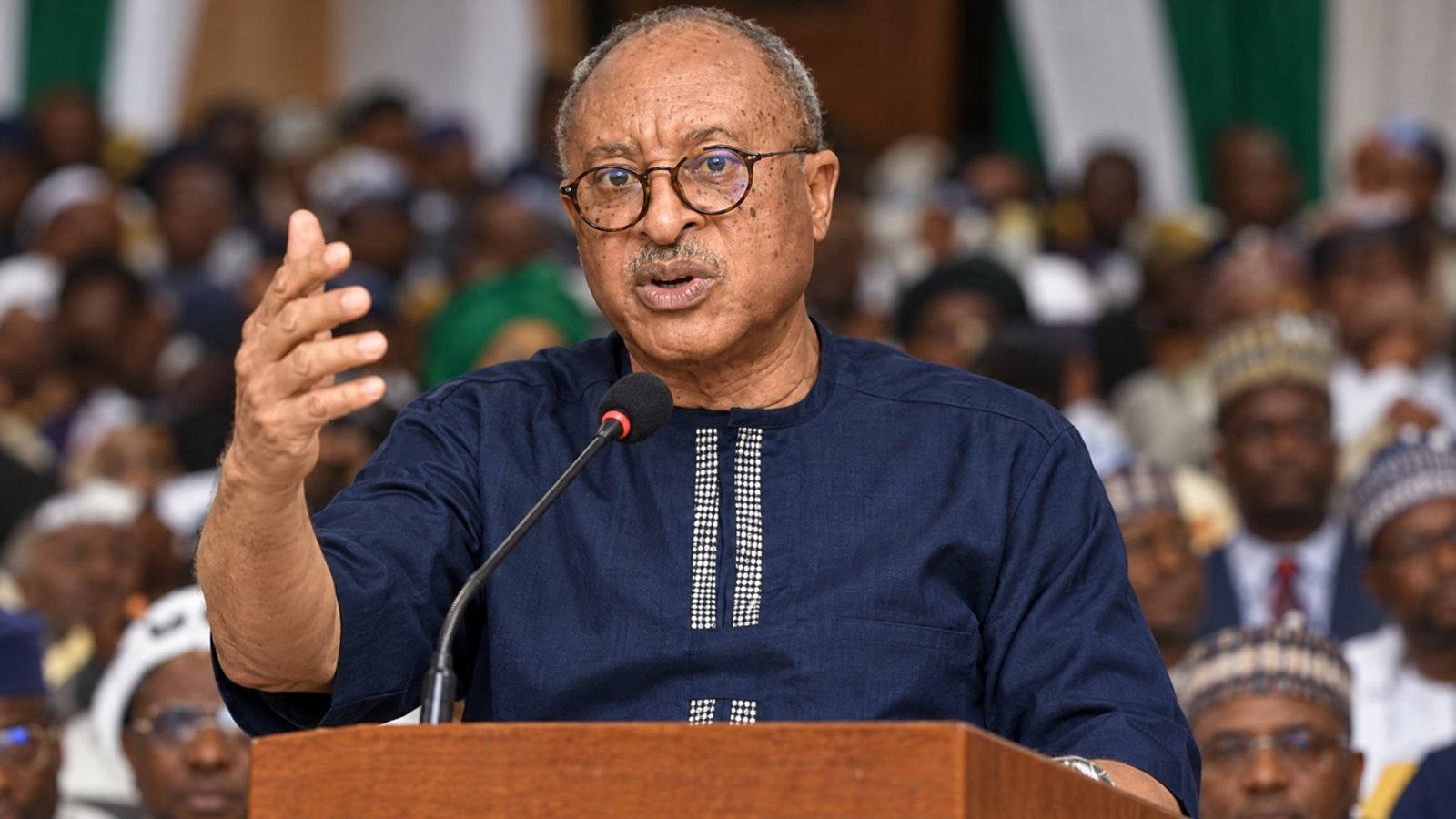
He chose Tuesday morning to say it, and he chose the format carefully. A professor of political economy with a national profile did not call a press conference or leak through a fixer. He posted a statement on his verified account, and in it made a claim that is either the most serious political warning of the year or the most combustible one: that the electoral commission is planning to rig the 2027 general elections, and that Nigerians may revolt if it continues.
Pat Utomi, a Lagos Business School professor who contested the 2023 presidential election on the Labour Party ticket, has spent the last three years as one of the most visible critics of how Nigeria’s elections are run. On Tuesday he went further than his usual language of concern. His argument is not that the process will be messy. It is that the institution is preparing to manipulate the register itself, and that the consequences of getting away with it would be disorder.
What He Actually Said
The specific grievance is unusually precise for a political speech. Utomi’s claim is that INEC distrusts technology when the results of a poll have to be uploaded to the results portal, but is happy to trust the same technology with the voters’ register. In other words: uploading is treated as a risk to be minimised, while building the list of who is allowed to vote is treated as a technical convenience. If the register can be adjusted and the results cannot, the direction of any fraud is decided before a single ballot is cast.
He added that the mood on the ground is volatile. “The people are angry everywhere,” he wrote, and said he cannot walk through an airport without being surrounded by people. From there he said Nigerians were already threatening to take the law into their own hands if INEC continues on the current path. His call was for all political parties to come together and demand a fully clean and transparently displayed register, and he urged international partners who support elections in Nigeria to make INEC aware of what is at stake.
He went further than that, characterising what INEC is doing as the moral equivalent of genocide and saying the International Criminal Court should be ready to try INEC officials, from clerical levels up to the chairman. The literary reference was to the line that it is not those who vote but those who count the votes that decide an election. His warning was that those who miscount may end up being statistics of a revolution stoked by public anger.
The register is where the argument actually lives
Strip away the rhetoric and the demand is specific: publish the register, display it cleanly, and let the country audit it. That is not a new argument, and the institution has been absorbing versions of it for months. The commission’s own probe into suspected AI-generated photographs in the voters’ register was one attempt to deal with the problem of who is actually on the list. So was the deadline that forced parties, including the PDP, ADC, NDC and LP, to correct omitted candidates before nominations closed. Every dispute about the 2027 cycle will eventually arrive at the same door: the list.
Who Is Pat Utomi?
Worth remembering that this is not a first rodeo. Utomi is an economist who spent decades in the corporate world before moving into public life, and he became nationally visible as a presidential candidate in 2023. That history explains the register argument better than anything else he has said. He is not a man who objects to elections being messy; he is a man who objects to elections being decided before the votes are counted, which is a different complaint entirely.
It also explains why he is still treated as a serious political actor rather than a commentator with a following. The opposition space he operates in has been trying to find a single vehicle for 2027, and the question of whether that vehicle comes from one party or several is still open. The Obi and Makinde rapprochement is one attempt at an alliance, and the Court of Appeal ruling that kept the NDC in the race is another. Calls for opposition unity, of the kind Utomi made on Tuesday, are the currency of that consolidation. Peter Obi’s own 2027 emergency priorities show how much of that agenda has already been written.
The Question Nobody Is Asking
Here is the thing worth sitting with. If the register is the battleground, then every party with a machine on the ground has an incentive to demand a clean audit of it, and that shared interest is worth more than any agreement between politicians. Utomi’s appeal to all parties, in other words, is not charity. It is an attempt to convert a tactical advantage into a structural one, because the party that forces the cleanest register is the party that survives the argument.
The risk is the opposite. If the register is genuinely compromised and the institutions cannot settle it, then a warning about revolt becomes a prediction that somebody else will fulfil. A political class that tells citizens to take the law into their hands on election day has outsourced the election. That is the tension inside the statement, and it is why the reaction should be read carefully rather than simply amplified. The frustration is real, and it is shared. The prescription is where Nigerian politicians have historically been weakest, and 2027 will be the test of whether that has changed.
Conclusion
The immediate demand is simple and achievable: a register that is displayed, verifiable and defended publicly before the campaigns begin. The bigger question is whether the institutions that should settle this argument will do it before the temperature rises. Pat Utomi has put a countdown on the table and told the country to watch it. What happens next depends less on what he says and more on what the electoral commission does with the register in the weeks ahead.