

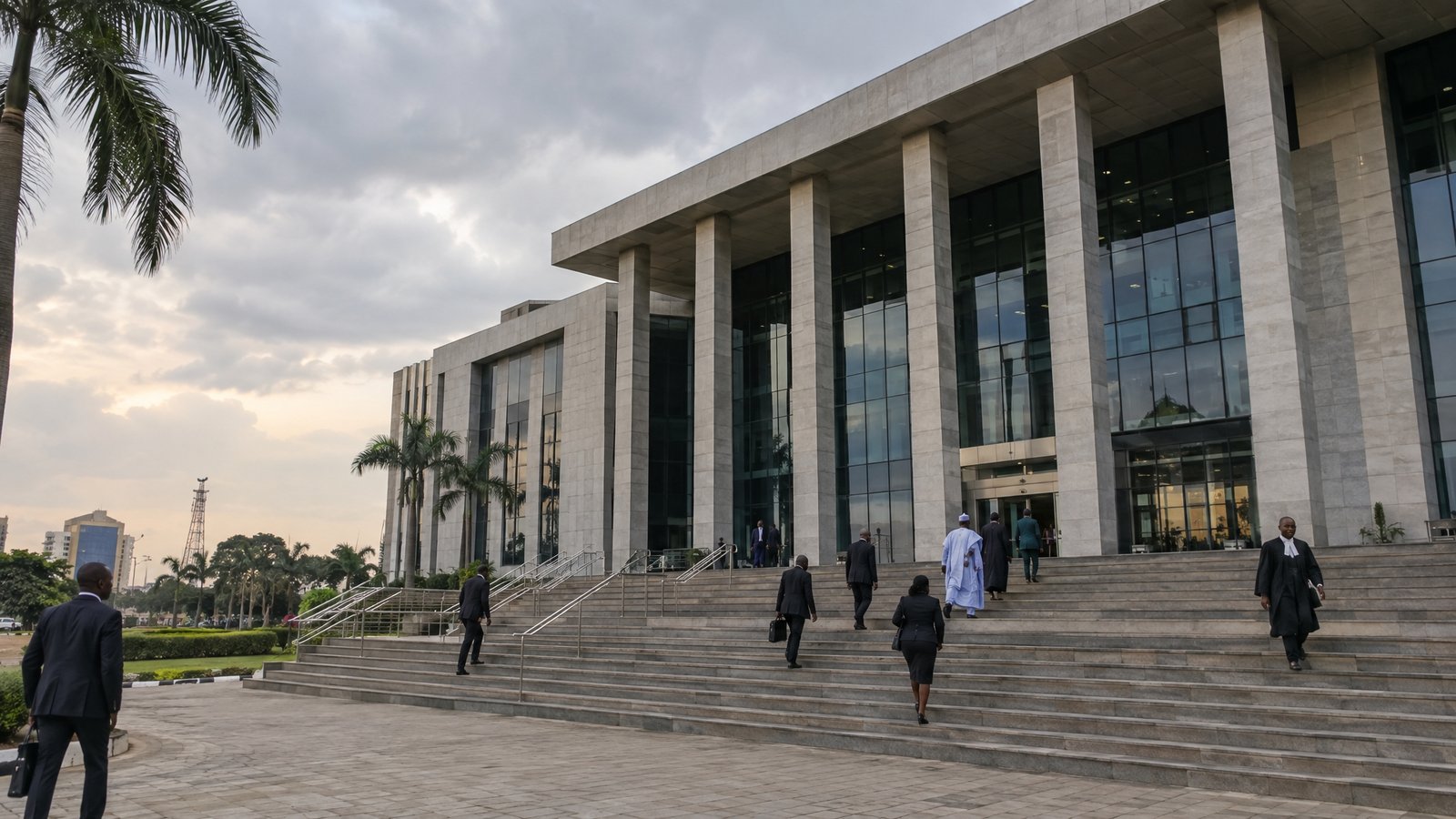
If your case has ever stalled in a Nigerian court, or your business account was frozen mid-case, then the decisions taken at the 112th meeting of the National Judicial Council are more than an administrative story. At that meeting, held on 3 November under the Chief Justice of Nigeria, Justice Kudirat Kekere-Ekun, the NJC suspended three judges for one year without pay, barred two of them from being elevated for three years, and issued warning letters or cautions to six more judicial officers. The council also recommended 28 candidates for appointment as judicial officers across five states and the Federal Capital Territory.
Here is what each sanction actually was, because the detail tells you more about how the system is working than the headline count does.
The three suspensions
- Justice Hannatu Mohammed Kabir, Nasarawa State High Court. She ordered the arrest and detention of a litigant for 58 days over alleged disobedience of court orders, without the mandatory Forms 48 and 49 being issued or served, and without proper contempt proceedings. The investigation committee found the contempt occurred outside the court’s presence, so it could not lawfully be summarily tried and punished, and that the litigant’s right to a fair hearing was violated. She is suspended for one year without pay and barred from elevation for three years.
- Grand Kadi Mohammed Sani Salihu, Jigawa State Sharia Court of Appeal. He was found to have exceeded his authority by setting up a committee to review a judgment already delivered by the FCT Upper Area Court, then sending the matter to a higher Sharia court judge who heard fresh evidence and delivered a second judgment. The council held that this amounted to an appeal against a valid judgment of a court of competent jurisdiction, contrary to Rule 3.3.1 of the Revised Code of Conduct for Judicial Officers, 2016. He is suspended for one year without pay, and the most senior Kadi of the Jigawa State Sharia Court of Appeal will now perform the functions of the office.
- Justice Sobere Biambo, Rivers State High Court. He issued bench warrants and imposed fines of N300,000 on each of two petitioners in a civil dispute over alleged disobedience of an interim injunction, again without contempt proceedings or the mandatory forms being served. One year without pay, and three years out of contention for elevation.
The six cautions
The rest are quieter but more revealing. Justice Bello Kawu of the FCT High Court was cautioned and placed on the council’s watch list after granting interim bail to former Attorney-General of the Federation Abubakar Malami on 23 December 2025, when he knew of a subsisting remand order from another judge of the same court that was due to expire at midnight on 24 December. Justices Danjuma Oyigbenu and Isa Ebini Kana of the Nasarawa State High Court received warning letters for failing to deliver judgment in an appeal within the constitutionally prescribed 90 days, breaching Section 294 of the 1999 Constitution as amended. Justice Mohammed Zubairu of the FCT High Court was cautioned for making orders after being told an appeal had already been entered at the Court of Appeal – in the council’s words, a disregard for the appellate court that bordered on insubordination. Justice C. A. Ogbuagor of the Enugu State High Court was cautioned for allegedly denying fair hearing and continuing proceedings despite a pending appeal and an application for a stay. And Justice Chibuike Azuama of the Imo State High Court was cautioned and placed on the watch list after granting an ex parte garnishee order that froze the bank accounts of Puma Energy, a company that was not a party to the substantive suit, and caused the company substantial losses.
What the pattern tells ordinary court users
Read together, the sanctions describe five recognisable problems. Contempt handled without the forms that make it lawful. Judgments reopened by nobody’s authority. Fines and warrants issued outside the process the law requires. Orders made while an appeal is pending. And money frozen in accounts belonging to people who are not even in the case.
That last one is the one Nigerian business owners should sit with. A garnishee order against a company that is not a party to your dispute does not just cost you legal fees; it can freeze your operations while the argument is resolved. If you find yourself under an order of that kind, the practical step is to establish the date it was made, whether it was served on you, and whether the matter that produced it is one you are actually a party to – and to put those points in writing to the court with a formal application, rather than waiting for it to be resolved by luck. This is general information about what the council found, not a substitute for advice from your own lawyer.
It is also why the appointment of 28 new judicial officers matters to people who never read a council bulletin. Judicial appointments influence the speed and quality of every file in the states concerned. The council asked the state governors to swear the recommended candidates in without delay, and separately directed the Imo State Judicial Service Commission to add Acting Chief Judge Justice Ijeoma Agugua to the shortlist for the substantive position, following a petition by Bob Kay Njemanze. A judiciary that disciplines its own is easier to trust, and a judiciary nobody watches is not.
Conclusion: what to watch next
Two things are worth following. First, whether the states move quickly on the 28 appointments, since vacancies in the High Courts are exactly what push files into delay. Second, whether the two judges barred from elevation appeal, and what happens to the thousands of live cases that touched the decisions now being questioned. For a country that spends a lot of political energy on how credible its elections will be in 2027, the credibility of the courts that settle the disputes matters just as much. We have covered the rule-of-law concerns raised in Nigeria’s civic space debate and the Court of Appeal ruling that kept the NDC in the 2027 race before; this week, the same theme arrived with a name list attached.
And for anyone who has ever wondered what “judicial misconduct” means in practice, the answer is now on record: 58 days in a cell without a hearing, a reopened judgment, and N300,000 taken from petitioners who were never heard. The new hospital rules and patient rights are another example of the same principle in the health sector – a right exists on paper only if somebody is willing to enforce it in a room where it matters.