

**Category:** Blog
**Tags:** Emir Sanusi, Education, Leadership, Kano, Traditional Rulers
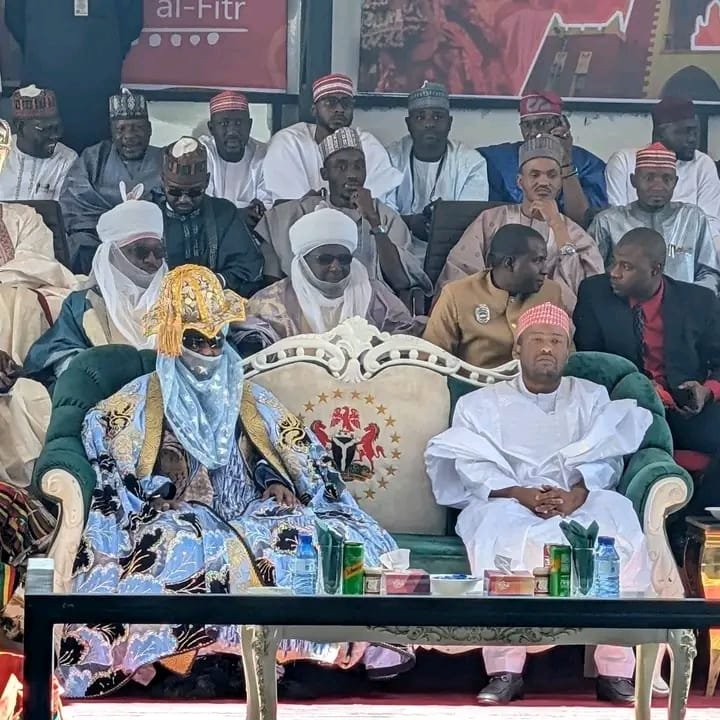
In a powerful and thought-provoking address at the recent Hawan Nasarawa Durbar held at the Government House in Kano, the 16th Emir of Kano, Muhammadu Sanusi II, delivered a profound message on the indispensable role of education in leadership. The revered monarch emphatically stated that “kingship without education is worthless,” a declaration that has resonated deeply within traditional and modern leadership circles across Nigeria.
Emir Sanusi, known for his progressive views and intellectual prowess, has consistently advocated for education as a cornerstone of societal development. His latest pronouncement serves as a stark reminder that even in roles steeped in tradition and heritage, knowledge and enlightenment are paramount for effective governance and societal advancement.
The Intersection of Tradition and Modernity
The Emir’s statement highlights the evolving nature of leadership, where traditional rulers are increasingly expected to possess not only ancestral wisdom but also a deep understanding of contemporary issues. Education, in this context, extends beyond formal schooling to encompass critical thinking, global awareness, and the ability to adapt to a rapidly changing world.
His words challenge the notion that inherited power alone is sufficient for leadership. Instead, he posits that an educated mind is crucial for making informed decisions, fostering innovation, and steering communities towards prosperity. This perspective is particularly relevant in Nigeria, where traditional institutions play a significant role in local governance and community development.
A Call for Enlightened Leadership
Emir Sanusi’s advocacy for education is not new. Throughout his tenure, he has championed various educational initiatives and spoken extensively on the need for intellectual growth among leaders and the populace alike. His message at the Durbar is a call to action for both those in power and those aspiring to lead, urging them to prioritize learning and intellectual development.
The impact of his words is expected to spark further discussions on educational reforms and the criteria for leadership in traditional institutions. As Nigeria continues its journey of development, the emphasis on enlightened leadership, as championed by figures like Emir Sanusi, becomes ever more critical.
His assertion that education is the true crown for kingship serves as a timeless principle for effective and impactful leadership in any era.