

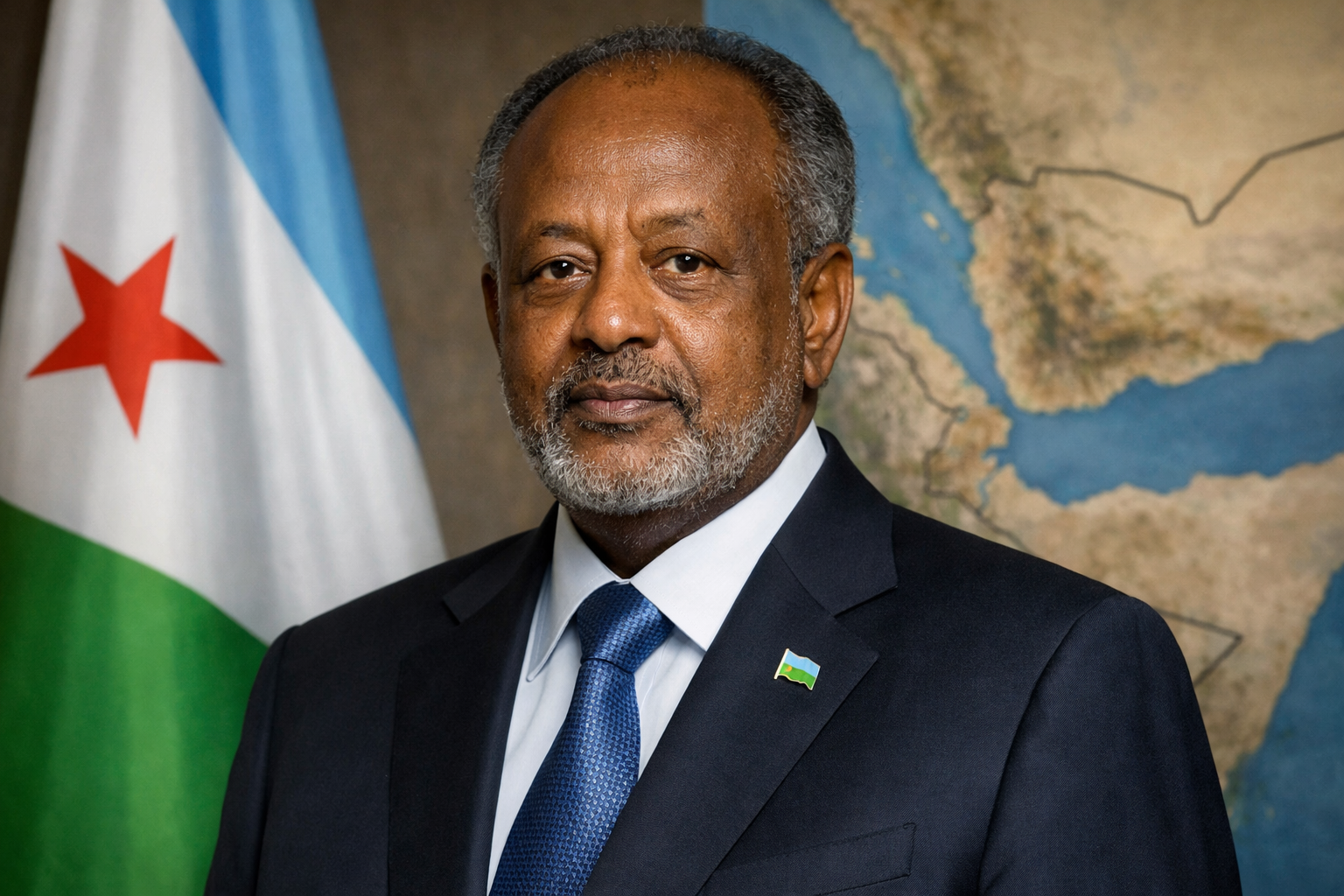
Introduction: A Familiar Face Returns to Power
In the strategically significant East African nation of Djibouti, President Ismaïl Omar Guelleh has once again secured a resounding victory, extending his tenure for an unprecedented sixth term. This re-election solidifies his long-standing grip on power in a country that, despite its small size, plays a crucial role in regional and international geopolitics due to its strategic location at the mouth of the Red Sea. Guelleh’s continued leadership raises questions about democratic transitions in Africa and the stability of a nation vital for global trade and military operations.
Guelleh’s Enduring Legacy: Stability and Strategic Alliances
President Guelleh first came to power in 1999, succeeding his uncle, Hassan Gouled Aptidon, who had led the country since its independence from France in 1977. Over his multiple terms, Guelleh has overseen a period of relative stability and has skillfully leveraged Djibouti’s geographical advantage to forge strong alliances with various international powers. The country hosts several foreign military bases, including those of the United States, France, China, and Japan, making it a critical hub for counter-terrorism efforts and maritime security in the volatile Horn of Africa region.
# The Geopolitical Chessboard
Djibouti’s strategic importance cannot be overstated. Its ports are essential for landlocked Ethiopia, and the nation serves as a gateway to the Suez Canal, one of the world’s busiest shipping lanes. Guelleh’s ability to balance the interests of competing global powers has been a hallmark of his presidency, ensuring a steady flow of foreign investment and maintaining the country’s pivotal role on the geopolitical chessboard. For more on political leadership and its impact on national development, consider the insights from [Economic Expert Mohammed Hayatu-Deen Dumps PDP for ADC: A New Path for Nigeria?](https://naira.blog/economic-expert-mohammed-hayatu-deen-dumps-pdp-for-adc-a-new-path-for-nigeria/).
Democratic Concerns and the Path Forward
While Guelleh’s supporters point to his role in maintaining stability and attracting foreign investment, critics often raise concerns about the state of democracy in Djibouti. His prolonged stay in power, facilitated by constitutional amendments, has led to accusations of authoritarianism and a lack of political pluralism. Opposition parties have frequently boycotted elections, citing an uneven playing field and restrictions on political freedoms.
The Future of Djibouti
As President Guelleh embarks on his sixth term, the focus will be on how his administration addresses these democratic concerns while continuing to navigate the complex regional dynamics. The balance between maintaining stability, fostering economic growth, and promoting greater political openness will be crucial for Djibouti’s long-term trajectory. The international community will be watching closely to see if this enduring leadership can evolve to meet the aspirations of a younger generation and the demands for more inclusive governance.
Conclusion: A Critical Juncture for East Africa
President Ismaïl Omar Guelleh’s re-election marks a critical juncture for Djibouti and the broader East African region. His continued leadership, while ensuring a degree of stability, also brings into sharp focus the challenges of democratic development in a region often characterized by political complexities. The coming years will undoubtedly test Guelleh’s ability to steer Djibouti towards a future that balances its strategic importance with the growing demands for political reform and greater citizen participation.