

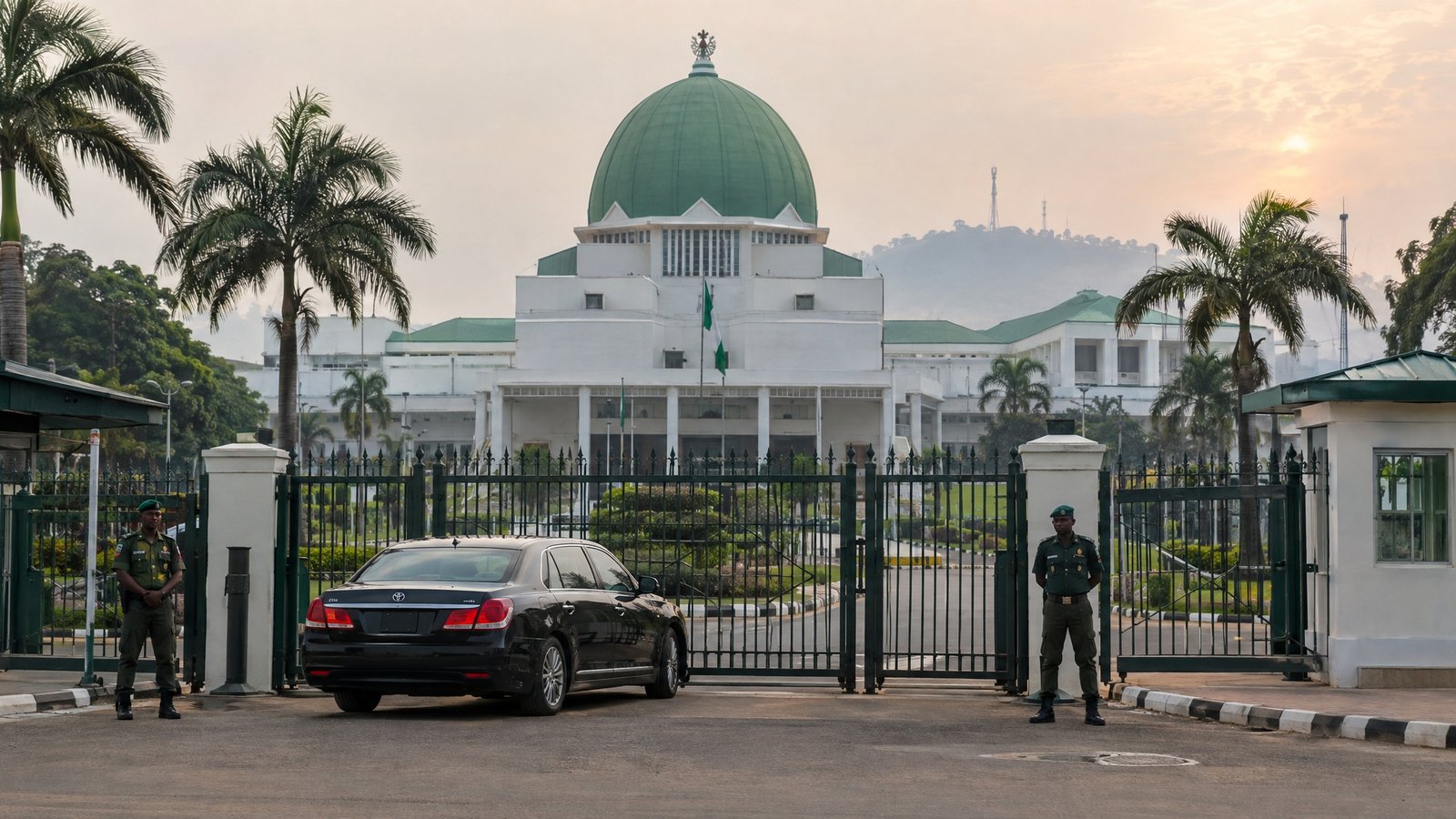
Twenty-eight. Set aside the noise around the state police debate for a minute and that is the number doing the heavy lifting this week. After months of copying, corrections and quiet lobbying, the National Assembly has confirmed that 28 state houses of assembly have approved the proposed amendment that would give states their own police commands — four more than the constitution demands.
The confirmation came from Kamoru Ogunlana, clerk to the National Assembly, who said his office has finished verifying the votes and proceedings submitted by the state legislatures. With that paperwork cleared, the bill can now go to President Bola Tinubu for assent. For Nigerians who have watched this idea travel from conference rooms to state houses, that is the closest the plan has come to becoming actual law.
How the bill got this far
The proposal was transmitted to all 36 state legislatures on 16 September 2026, with a request that decisions be returned within 30 days. That deadline lapsed on 15 October, and the office said it would keep receiving reports anyway because the constitutional clock had not started. The 28 approvals were confirmed only after administrative checks on the accompanying votes and proceedings, which is the part many commentators skipped in their rush to declare victory.
Two legal points came out of the same statement, and both matter for what happens next. The approvals clear the bar in Section 9 of the Constitution, which requires the support of not less than two-thirds of the 36 state legislatures — 24 states. And Ogunlana pointed out that Section 9 does not prescribe a third reading for a constitutional alteration bill, the way it does for an ordinary bill. That removes one procedural objection that had been raised in some quarters.
It is worth remembering that the country has been debating this for years rather than weeks. The comparisons the inspector general of police has drawn with policing models in India, the United States and Pakistan shaped the current design, and the argument has moved further than many Nigerians realise.
What the amendment actually changes
The bill seeks to amend the 1999 Constitution to provide for the establishment of State Police Services and related matters. Nigeria currently runs a single, centrally controlled police force with no independent state commands, even in states that have experimented with local arrangements. That is the gap the sponsors are trying to close.
The case for it is straightforward. Proponents argue that a state command would collect intelligence faster, respond to local flashpoints with local knowledge, and stop kidnapping, banditry and communal violence from being handled as purely federal matters. The case against it is just as concrete: state control of policing can be abused, funding for a new service is never guaranteed, and accountability becomes murkier when the same politicians who employ the force also command it.
Neither side’s argument changes with the arithmetic. Twenty-eight approvals settle a threshold question; they do not settle a policy question.
The manpower question nobody has answered
Creating a service on paper is the easy part. Building it requires officers, training, pay and a chain of command that does not duplicate the Nigeria Police Force. Nigeria has already seen how fast recruitment rumours travel when the police push back on a circular, as happened with the viral notice on training for 50,000 new constables that the force publicly disowned. Any state police structure will face the same test: who is recruited, who pays them, and who answers when they misbehave.
What happens on Tinubu’s desk
Transmission for assent is a legal step, not a formality. The bill can only become law once the President signs it, and until that happens, the existing constitutional position governs security operations in every state.
For the wider political season, the timing is not accidental. A state police framework lands in the middle of a build-up to the 2027 general elections, when the ruling party has been arguing that its achievements on the economy justify continuity and the opposition has been pressing how it intends to present a united alternative to the All Progressives Congress. Security is the question neither side can duck, and the campaign Tinubu launched in Kaduna leaned heavily on it. A state police bill signed this year would be a serious answer to that argument — provided the framework that comes with it has teeth.
There is also the question of money, which is where most proposals of this size are quietly buried. A new tier of policing does not pay for itself. Whatever the final framework says about funding, command and oversight, Nigerians will be watching to see whether those words survive contact with the states that will have to implement them. As the campaign by northern leaders for a country where nobody feels completely safe illustrates, people on the ground have already stopped waiting for announcements and started judging by what security agencies actually do.
Conclusion
Twenty-eight state houses have said yes, and one signature now stands between the state police and the statute book. That is genuine progress for a debate that spent years going nowhere, and it deserves to be marked before the caveats begin.
The caveats matter just as much. A new police tier without new money becomes an unfunded mandate. A new police tier without published rules on recruitment, promotion and discipline becomes a political tool. And a new police tier that duplicates the federal force without absorbing it becomes two services arguing over the same crime scene. The framework that arrives alongside the assent is what will decide whether this counts as a turning point or just another line in a speech.
For now, the next move is simple and it belongs to one desk. Everything else is commentary.