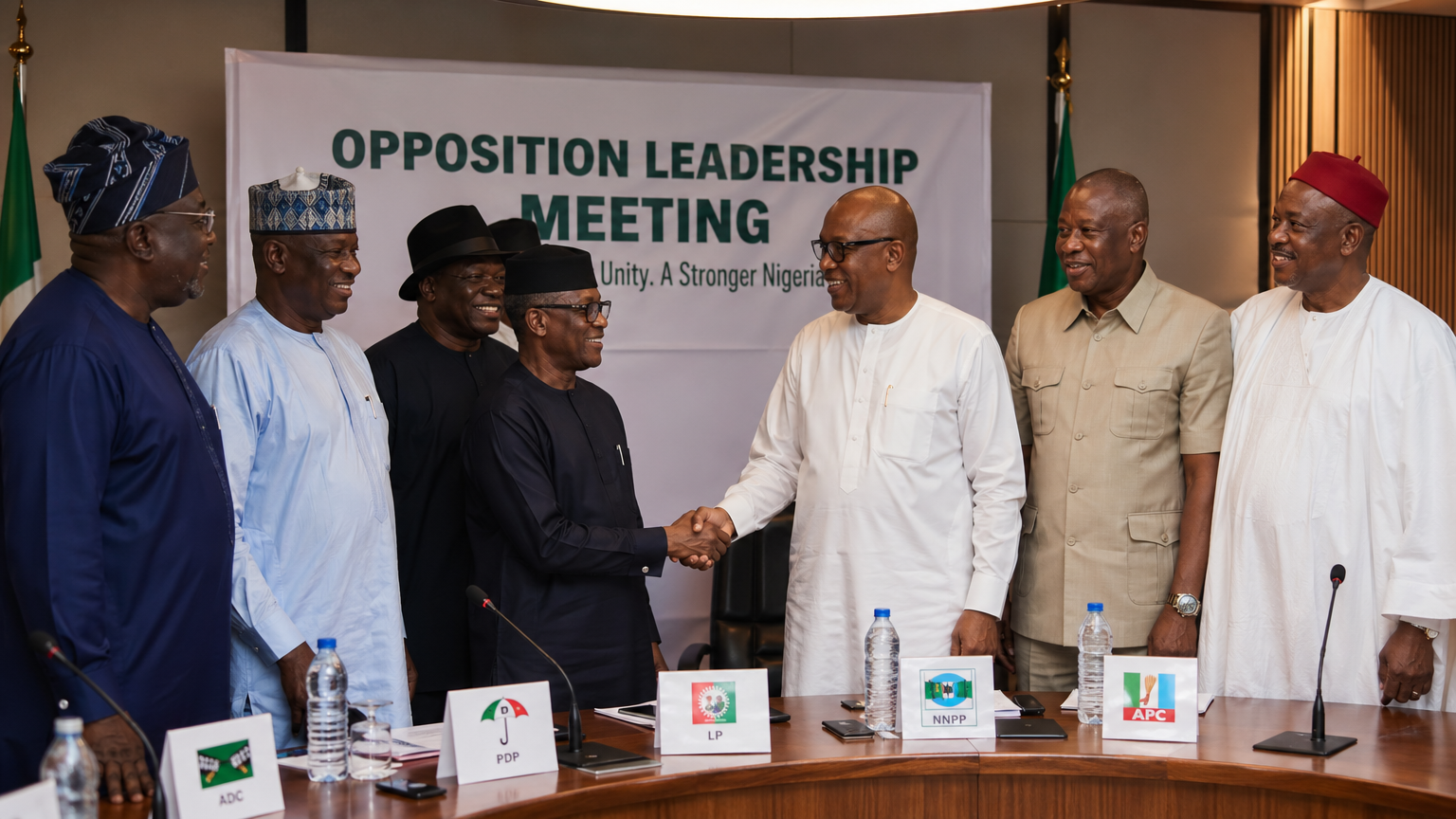
As the 2027 general elections draw closer, Nigeria’s political landscape is witnessing a strategic realignment among opposition parties. In a move designed to present a formidable challenge to the incumbent, various opposition factions have reportedly reached a consensus to field a single presidential candidate. This development signals a potential shift in the country’s political dynamics, as parties traditionally fragmented now seek strength in unity.
A United Front Against Dominance
The decision to coalesce around a single candidate is seen as a direct response to the perceived dominance of the ruling party and concerns about the erosion of multi-party democracy, as highlighted by figures like David Mark. By consolidating their resources and voter base, opposition parties aim to avoid the vote-splitting that has often favored the ruling party in past elections. This strategic alliance could potentially galvanize a broader segment of the electorate seeking alternative leadership.
The Ibadan Summit: A Catalyst for Unity
Reports indicate that discussions leading to this agreement were a key part of the recent Ibadan Summit, which brought together prominent opposition leaders. This summit, initially noted for Governor Seyi Makinde’s cautionary remarks on one-party rule, appears to have also served as a crucial forum for fostering inter-party cooperation. The collective resolve demonstrated at Ibadan suggests a serious commitment to presenting a unified and credible alternative in the upcoming presidential race.
Implications for the 2027 Presidential Race
The emergence of a single opposition candidate could significantly alter the competitive nature of the 2027 elections. It would force the ruling party to contend with a more concentrated challenge, potentially leading to a more vigorous and issue-focused campaign. For Nigerian voters, this development could offer a clearer choice and a more defined alternative, thereby strengthening the democratic process by ensuring a more balanced contest for power.