

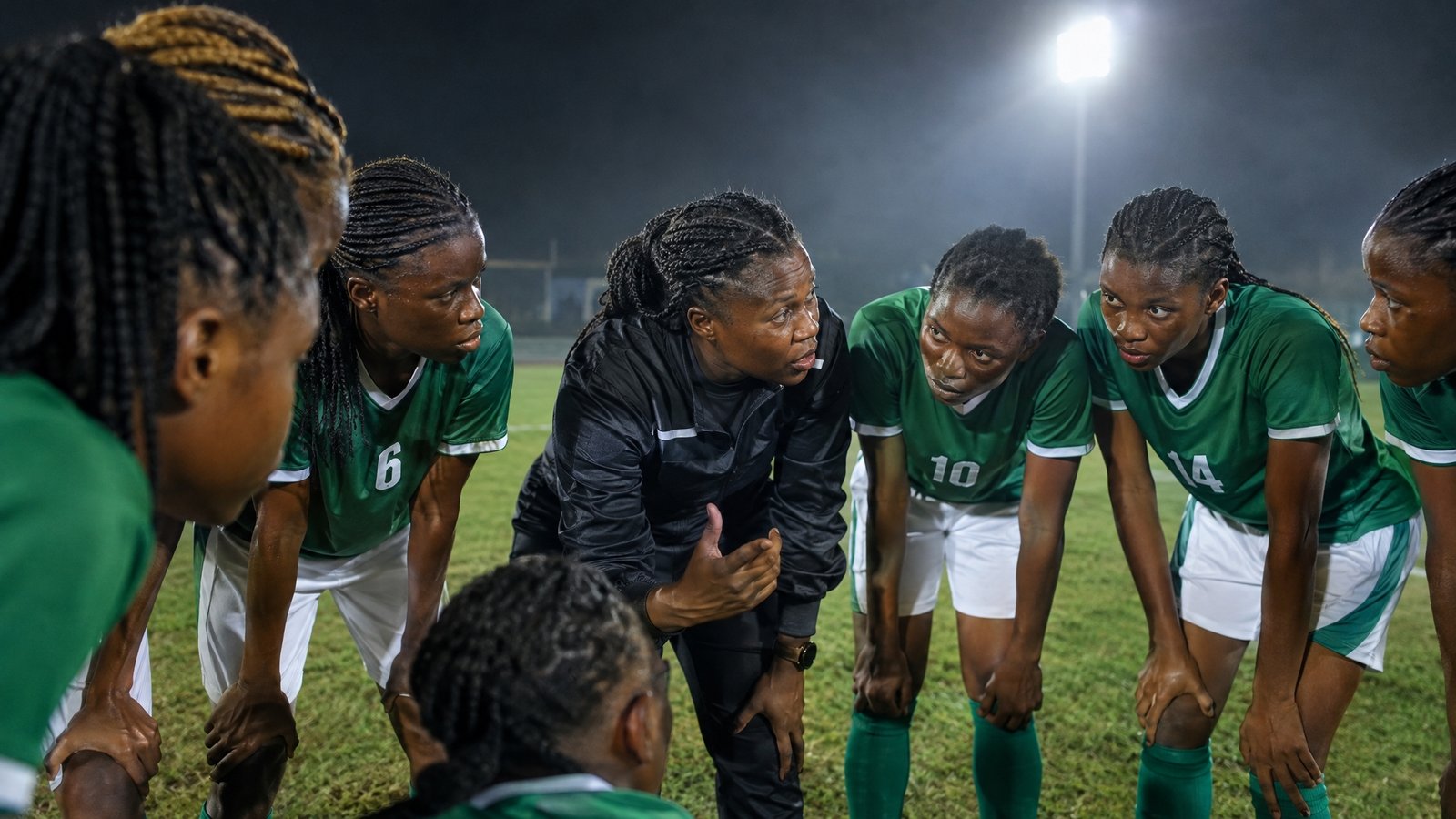
Tonight at the Mohammed VI Football Complex in Rabat, Nigeria’s under-17 women face Brazil in a semi-final, and the team standing on the touchline would be playing for a place in a final it has never reached. The tie kicks off at 6pm Morocco time, which is 7pm in Nigeria, on Pitch 3.
That is a rare kind of football evening. The Flamingos are not chasing a quarter-final, they are chasing history, while Brazil chase the only trophy they have never lifted.
How Nigeria got here
The quarter-final was the hardest thing to survive. Nigeria beat Venezuela 1-0 on Sunday, with captain Azeezat Oduntan converting an 89th-minute penalty after Oluebube Umejiaku was fouled in the box. Ninety minutes of nothing, then a penalty, then a final whistle and a place in the last four. It was the kind of narrow win that leaves a team carrying both confidence and a warning.
The road here ran through a 3-1 win over the defending champions in the group stage and a knockout victory in Salé, and the match that put the Flamingos into the quarter-finals is still the reference point for how they have played this tournament. The deeper significance is the history: this is Nigeria’s second appearance in a U-17 Women’s World Cup semi-final. The first, in 2022 in India, ended with a bronze medal.
Who they are playing
Brazil needed everything they had to get here. They came from behind to beat China PR 2-1 in the quarter-final, and in the round of 16 they drew 3-3 with Poland before winning 8-7 on penalties. Nine different Brazilian players have scored in this tournament, with Greise Kelly leading the scoreline on three goals. They are unbeaten in Morocco and they have never won this trophy.
Brazil’s coach Rilany Silva did not try to hide what worries her about tonight. She described Nigeria as a physically strong side and said that by the 90th minute they would probably still be running as if it were the fifth minute. That is a compliment with an edge to it: the plan is to outlast them.
Brazil’s centre-back Andreyna put it more directly when she spoke to FIFA: “I expect a very tough match. Not just because it’s against Nigeria, but because it’s a World Cup semi-final. The team that makes the fewest mistakes and executes their game plan the best will win this one.”
What the winning side gets
For Nigeria, a win means a first appearance in the final of a FIFA Women’s World Cup at any age. For Brazil, it means a first trophy after decades of near misses. The stakes are not symmetrical, but neither is the pressure: Brazil has a habit in this competition, Nigeria has a breakthrough to chase.
Akeem Busari, who has coached this side through the knockout rounds, has not needed to shout. After the Venezuela win he said: “We want to give our best in the next match and show everyone what we can do.” It is the calmest possible statement before a night that could define a generation of Nigerian footballers.
What the team cannot control is who waits in the final. The other semi-final is not yet settled, so Nigeria would face an opponent still being decided when the players in green walk out at 7pm. You prepare for what you can see and deal with what arrives.
The bigger picture for Nigerian women’s football
The attention on this team sits inside a wider conversation about where Nigerian women’s football is heading. At senior level, the Super Falcons’ run at the last Africa Cup of Nations ended with a quarter-final defeat to Cameroon. The D’Tigress’ own struggles in the senior World Cup and the heartbreak of the Super Falcons in the last continental championship are the backdrop against which the Flamingos are doing something different.
Success at youth level is not a guarantee of anything at senior level. Nigerian football has seen that pattern repeatedly, and the debate about reform, the federation and the national team pathway is precisely about keeping the pathway intact once the attention moves elsewhere.
Conclusion
Brazil have the experience, the scoreline and the shootout confidence. Nigeria have the defence that has shipped one goal in a knockout tournament, a captain who converts penalties and a crowd at home that will stay up late.
One team will be in the final. The other will be counting how close it got, and how many of these players will still be in the national team set-up four years from now, when the question is whether any of tonight’s teenagers become household names in their own country.
Whatever the score, Nigeria’s under-17 women have already done something no side of their age has managed in the history of this tournament. One more result, and they will have done it twice.