

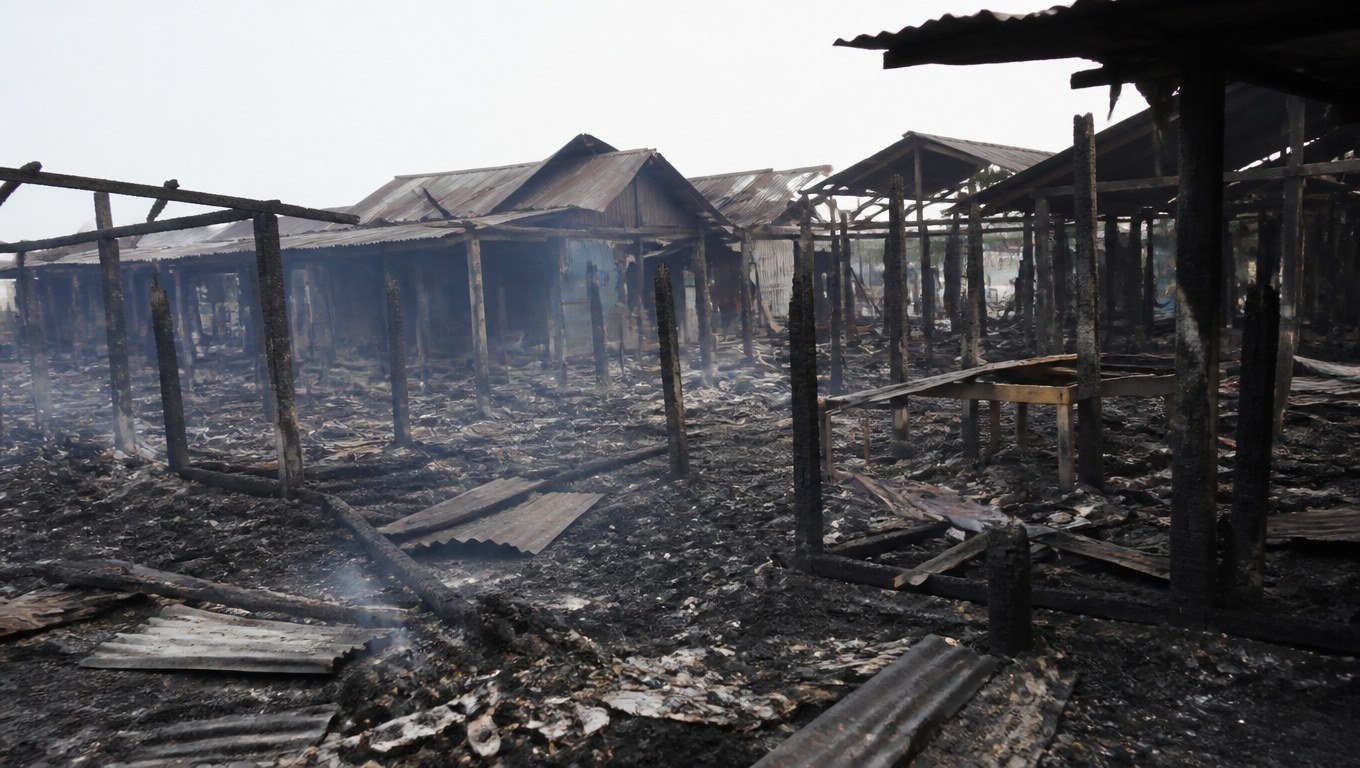
Traders at Kano’s Kofar Ruwa Timber Market woke on Saturday to the sound nobody in commerce ever wants to hear — and by breakfast, 110 of their shops and structures were ash. The Kano State Fire Service has confirmed the early-morning inferno that tore through the metropolis’s timber hub, with the full damage count still being assessed.
What the Fire Service Confirmed
The agency’s spokesperson, Kabiru Jafaru, said the fire broke out at approximately 7:39am on Saturday, October 31, after a distress call from a timber dealer, Alhaji Abba. Firefighters from stations across the Kano metropolis were deployed immediately, and on arrival found flames already spreading across several sections of the market. By the service’s account, the teams eventually brought the blaze under control, preventing it from jumping to other sections. The confirmed toll: 75 permanent buildings and 35 temporary structures destroyed — the 110 buildings and structures reported overall.
The Harmattan Warning Everyone Should Heed
Even before the cause of the fire and the traders’ full financial losses are established, the Fire Service had a message for business owners statewide: stay vigilant, adopt proper fire-safety measures, and take extra care as the harmattan season arrives — dry, windy weather multiplies fire risk exactly when markets are fullest. For a timber market — stacked, dried wood in dense rows — those are not boilerplate cautions; they are the difference between a contained scare and a Saturday morning like this one.
What the Traders Face Now
Timber trading is capital-heavy: stock, sheds and equipment are the business, and when they burn, rebuilding starts from zero. Nigerian market fires follow a grim pattern — inadequate hydrants, blocked access lanes, flammable stockpiles — and the recovery usually leans on community networks, savings groups and whatever insurance exists. For small traders everywhere, the episode is a hard prompt on the boring protections: an emergency fund, a documented inventory, and basic fire discipline, the same foundations our smart money guide and breakdown of business ideas that survive Nigeria’s realities keep emphasising. The broader strain on household and business budgets, tracked in our 2026 cost-of-living coverage, makes every uninsured loss heavier.
Final Word
One hundred and ten structures, one market’s Saturday, and a warning issued in advance for every other market in the country as the dry season sets in. This page will update with the investigation’s findings and any relief measures for the affected traders.