

Introduction
Nigerians are once again grappling with widespread and persistent power outages, a situation that has prompted an apology from the Minister of Power, Adebayo Adelabu. The Minister acknowledged the frustration of citizens, stating that the current challenges are not by design but are due to a combination of technical issues and problems with gas supply to power plants. This ongoing ‘power wahala’ continues to impact daily life and economic activities across the nation.
The Root of the Problem: Technicalities and Gas Supply
The Minister’s apology sheds light on the complex issues plaguing Nigeria’s power sector. Technical faults within the transmission and distribution networks, coupled with inadequate gas supply to thermal power stations, are identified as primary culprits. These challenges often lead to grid collapses and reduced generation capacity, resulting in the erratic electricity supply that has become a common experience for many Nigerians.
Impact on Daily Life and Businesses
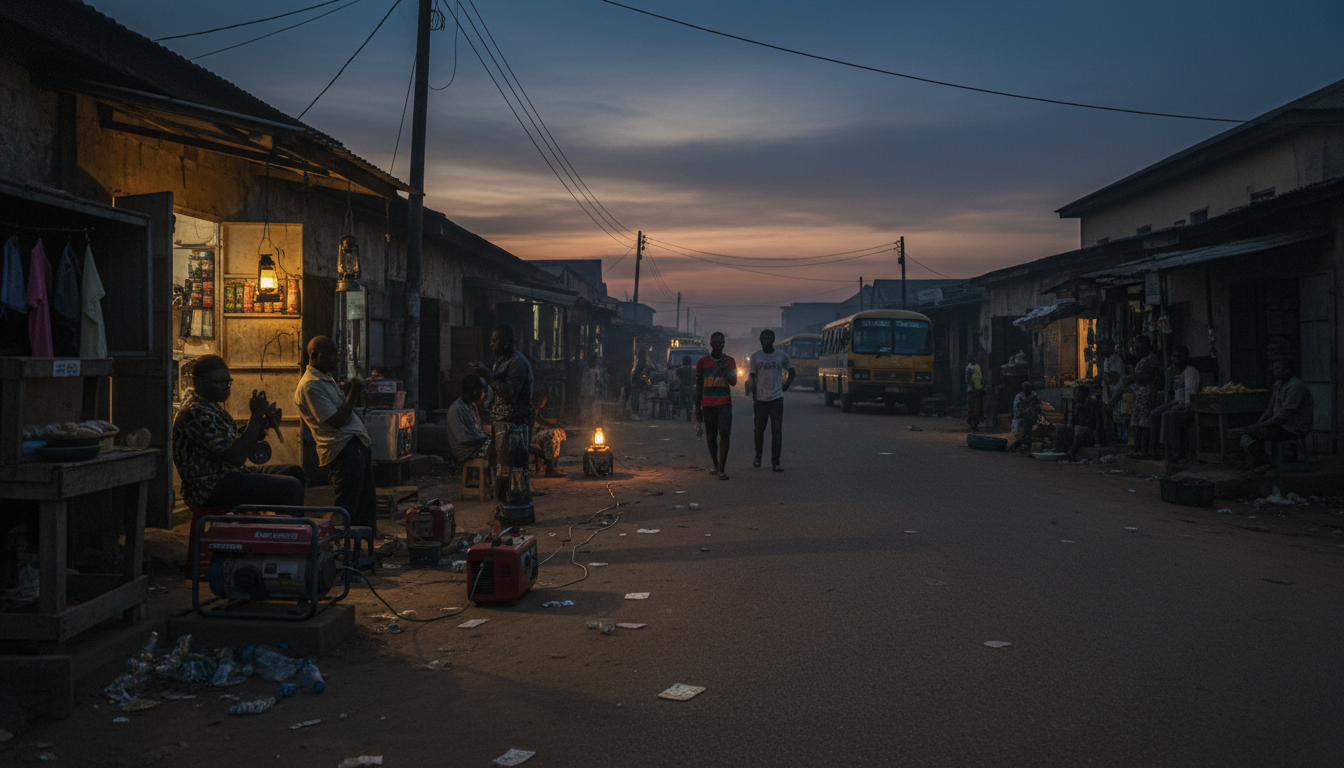
The persistent power outages have far-reaching consequences. Households are forced to rely on expensive and noisy generators, increasing their cost of living. Small and medium-sized enterprises (SMEs), the backbone of the Nigerian economy, suffer significant losses due to disruptions in production and increased operational costs. The lack of reliable power also affects essential services, including healthcare and education.
Government’s Commitment to Resolution
Despite the current difficulties, Minister Adelabu assured the public that the government is actively working to address these issues. Efforts are reportedly underway to resolve gas supply constraints, upgrade existing infrastructure, and explore alternative energy sources to stabilize the national grid. The goal is to ensure a more consistent and reliable electricity supply for all Nigerians.
Conclusion
The apology from the Minister of Power underscores the severity of Nigeria’s electricity crisis. While the challenges are significant, the government’s acknowledgment and commitment to finding lasting solutions offer a glimmer of hope. Nigerians, however, remain eager for tangible improvements that will translate into stable power supply, essential for both economic growth and an improved quality of life. The journey to consistent electricity is long, but the expectation for progress remains high.