

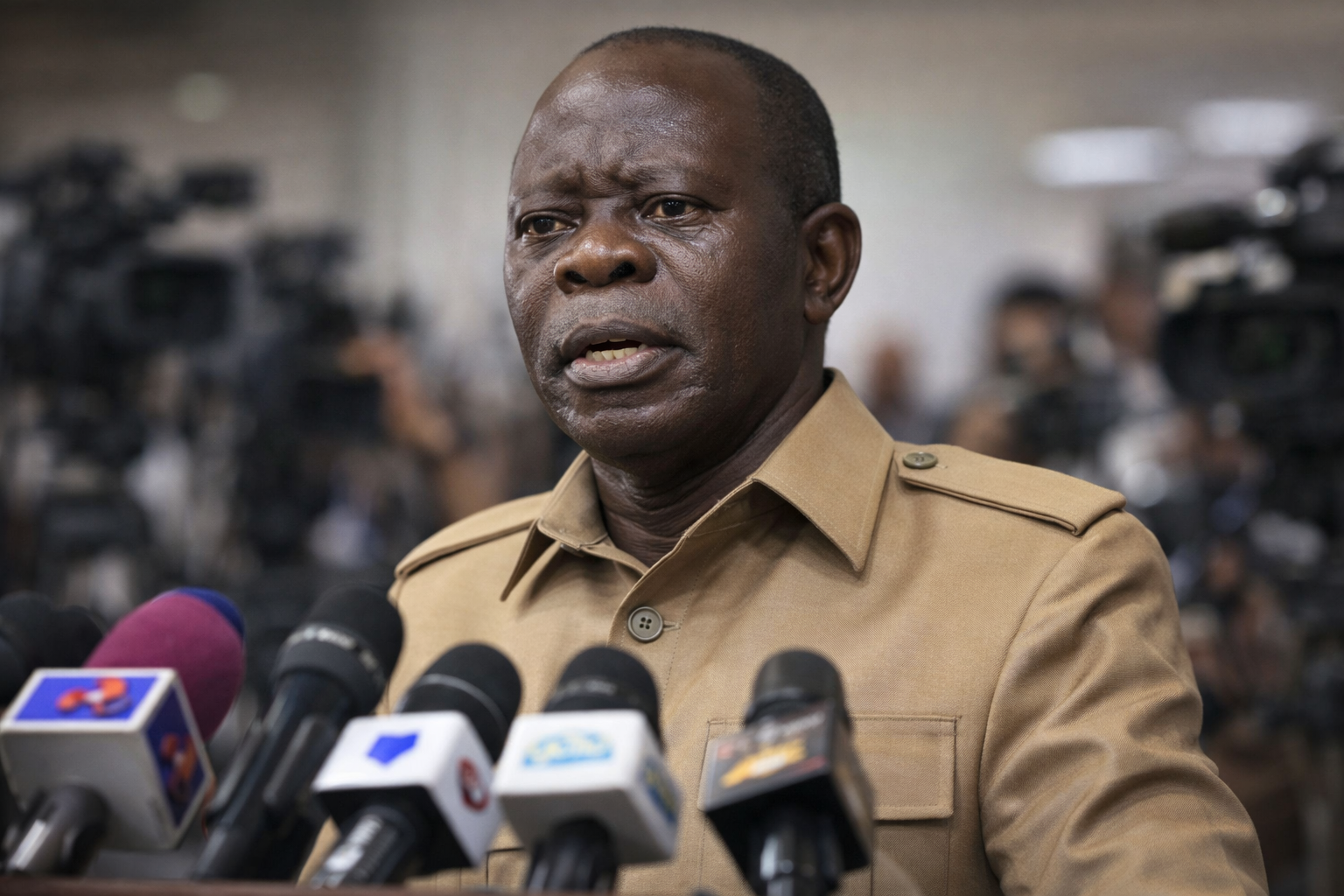
A prominent chieftain of the All Progressives Congress (APC) and former Governor of Edo State, Adams Oshiomhole, has weighed in on the persistent internal wrangling within Nigeria’s opposition parties. His stance is clear and unequivocal: the APC is not to blame for the disarray, and opposition factions must look inwards to resolve their own challenges. This comes at a time when political tensions are high across the country.
A Firm Rejection of Blame
Oshiomhole’s comments come amidst ongoing criticisms and accusations from some quarters, suggesting that the ruling APC might be orchestrating or benefiting from the instability within rival political camps. However, the former Edo Governor firmly rejected these assertions, emphasizing that the responsibility for internal cohesion lies squarely with the respective opposition parties. His remarks underscore a growing sentiment within the APC that opposition parties need to focus on self-correction rather than external blame.
The Imperative of Internal Resolution
The continuous crises plaguing opposition parties have often been cited as a significant factor hindering their ability to present a united front against the ruling party. Oshiomhole’s statement serves as a stark reminder of the imperative for these parties to address their foundational issues. Without internal stability and a clear vision, their capacity to effectively challenge the incumbent government remains compromised. This perspective highlights the leadership struggles that often define political parties.
Implications for Nigeria’s Democratic Landscape
The health of Nigeria’s democracy is intrinsically linked to the strength and viability of its opposition. A robust opposition plays a critical role in providing checks and balances, offering alternative policies, and holding the government accountable. Oshiomhole’s call for opposition parties to resolve their crises independently, while perhaps self-serving for the APC, also points to a fundamental truth about democratic governance: strong parties are built from within. The coming months will reveal whether opposition parties heed this call and embark on genuine reconciliation and restructuring.
Conclusion
Adams Oshiomhole’s recent declaration sends a clear message to Nigeria’s opposition: the onus of resolving internal disputes rests solely on their shoulders. His remarks not only deflect blame from the APC but also highlight the critical need for opposition parties to foster unity and stability from within. As Nigeria approaches another election cycle, the ability of these parties to overcome their internal challenges will undoubtedly shape the future of the nation’s political landscape.