

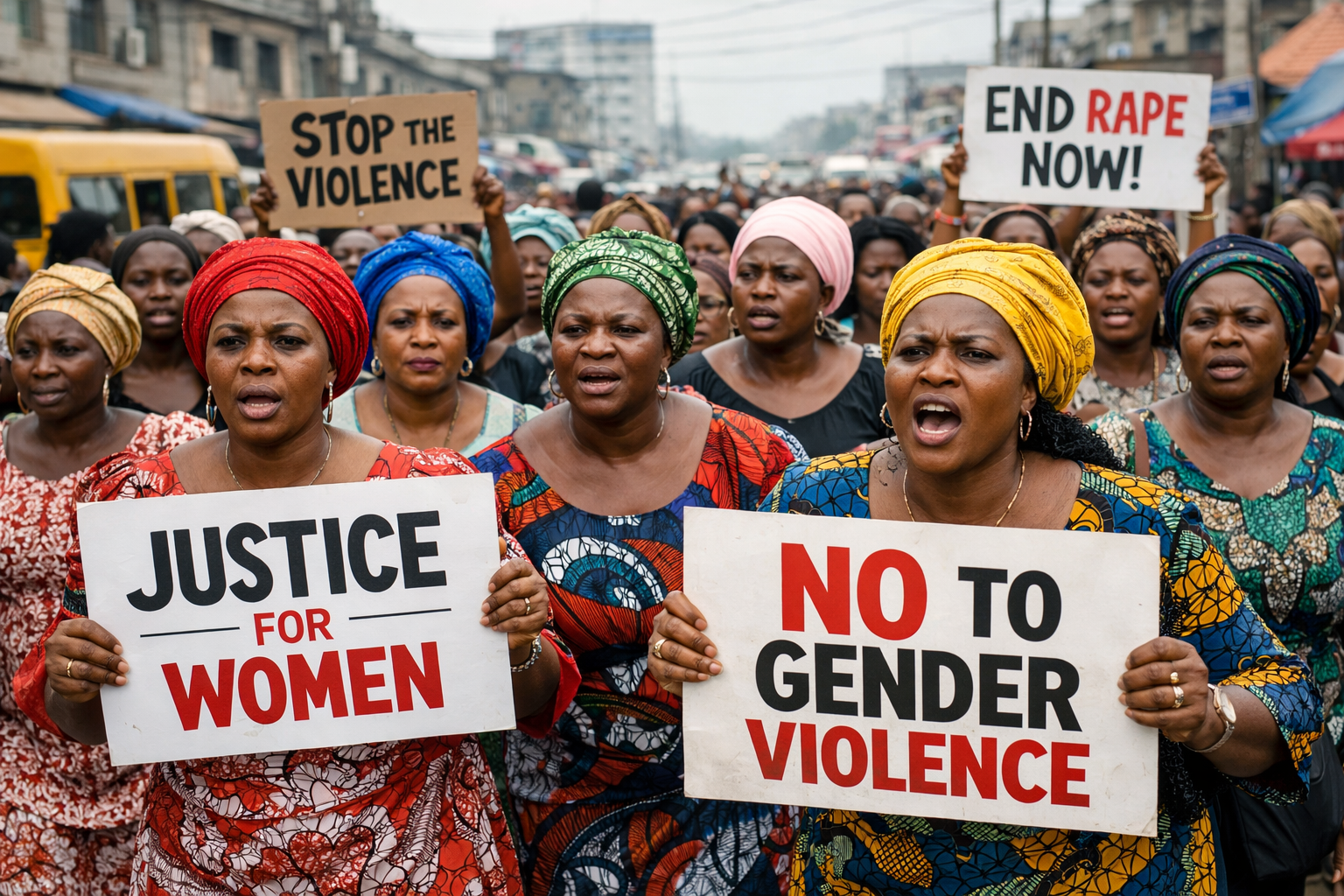
A wave of anger and disbelief has swept across Nigeria following the emergence of disturbing viral videos showing the harassment and sexual assault of several women during a traditional festival in Delta State. The incident, which occurred in Ozoro, the headquarters of Isoko North Local Government Area, has drawn widespread condemnation from citizens, government officials, and human rights groups.
The “Alue-Do” Festival Nightmare
The horrifying attacks took place on Thursday, March 19, 2026, during the controversial “Alue-Do” festival. Described by locals as a fertility rite aimed at invoking blessings for couples struggling with childbirth, the festival reportedly involves strict cultural practices, including restrictions on women’s movement during certain hours.
According to residents, an announcement was made warning women to stay indoors during the ritual. However, those who were caught outside—many of whom were reportedly unaware of the restriction—became targets of mob violence.
Videos that surfaced on social media showed young men chasing, stripping, and assaulting women in broad daylight. In one particularly distressing clip, a young lady on a motorcycle was dragged to the ground and her clothes torn by a mob. Another video captured a victim desperately trying to shield herself as attackers pulled at her dress.
Many of the victims were identified as students of the Southern Delta University, located in the town. The Student Union Government President, Oribelua Precious, confirmed that several students were admitted to the hospital following the attacks, though he noted that doctors confirmed no penetrative rape occurred.
Community and Government React
The incident has sparked a massive outcry, with many Nigerians demanding an immediate ban on the festival. The Ovie of Ozoro Kingdom, His Royal Majesty Anthony Ogbogbo, expressed shock over the events, stating that in his 20 years on the throne, he had never heard of a festival being used as an excuse to molest women.
The Delta State Government swiftly condemned the acts, describing them as “barbaric and unacceptable.” Charles Aniagwu, the Commissioner for Works and Public Information, emphasized that no cultural gathering should serve as a cover for criminal behavior. “Such barbaric acts are totally unacceptable and have no place in our society,” he declared, reaffirming the state’s zero-tolerance policy for gender-based violence.
At the federal level, the Minister of Women Affairs and Social Development, Imaan Sulaiman-Ibrahim, directed that all suspects be arrested and prosecuted, calling for a transparent and accelerated investigation.
Police Make Arrests
The Nigeria Police Force has swung into action, confirming the arrest of 15 individuals in connection with the assaults. According to the Delta State Police Public Relations Officer, Bright Edafe, the suspects include a community head identified as Omorede Sunday and four other chief organizers of the event.
“The Commissioner of Police has ordered their transfer to the State Criminal Investigation Department,” Edafe stated. He issued a stern warning that “no custom or tradition is superior to the rights of citizens” and urged witnesses and victims to come forward with information to aid the ongoing investigation.
As the nation waits for justice to be served, the Ozoro incident has ignited a crucial conversation about the intersection of cultural traditions and fundamental human rights in modern Nigeria.
What are your thoughts on this tragic event? Should controversial cultural festivals be banned entirely? Share your views in the comments.