

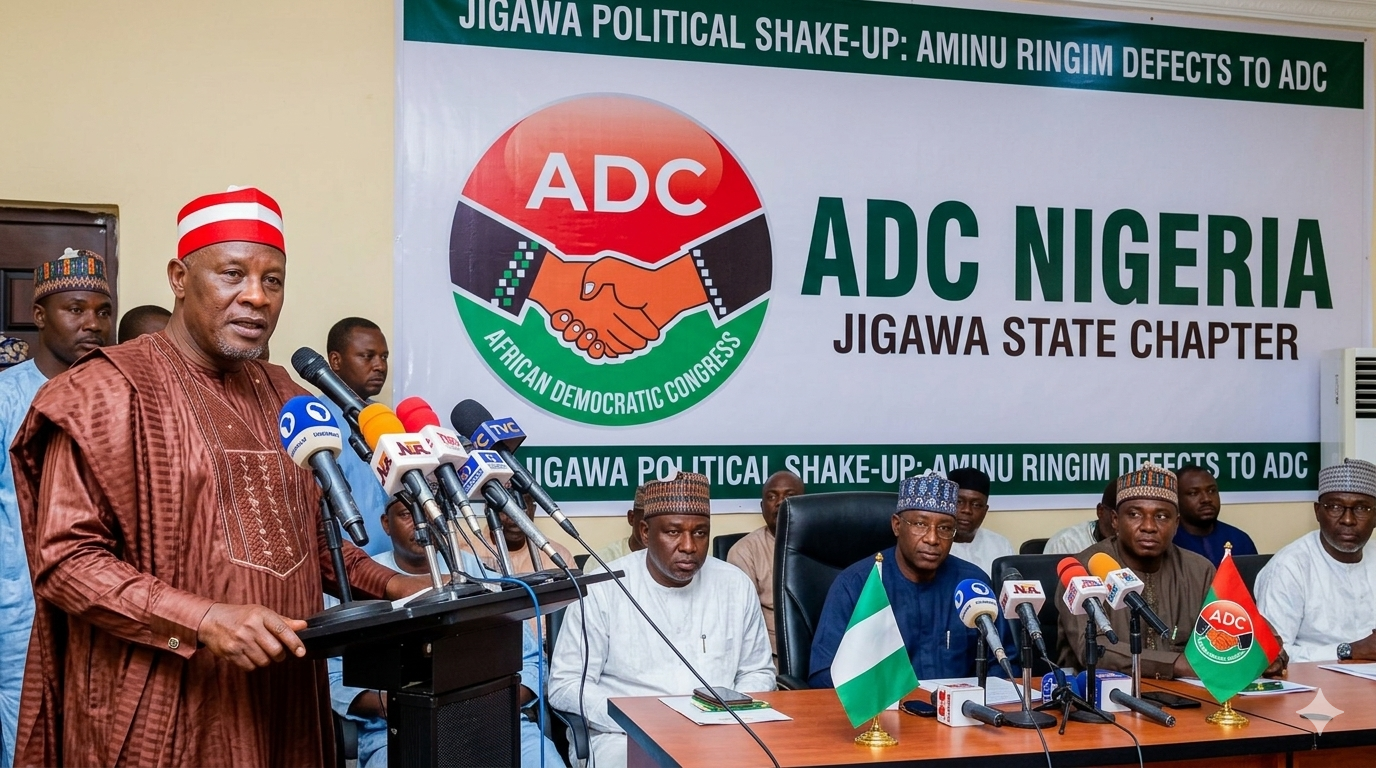
In a significant political development in Jigawa State, Aminu Ibrahim Ringim, a leading figure of the New Nigeria Peoples Party (NNPP), has officially defected to the African Democratic Congress (ADC). This move is poised to reshape the political landscape of the state, given Ringim’s considerable influence and political history in the region.
A Strategic Shift in Jigawa Politics
Aminu Ibrahim Ringim is not a new name in Jigawa politics; he is a former gubernatorial candidate and a political heavyweight whose decisions often carry substantial weight. His defection to the ADC, a party whose national chairman, David Mark, has recently warned against Nigeria’s drift towards a one-party state, could be seen as a strategic maneuver to strengthen the opposition’s front.
Implications for the ADC and Regional Influence
This high-profile defection is expected to significantly bolster the ADC’s presence and influence, particularly in the northern part of Nigeria. Ringim’s move could attract other political figures and grassroots supporters, potentially making the ADC a more formidable force in upcoming elections. It also highlights the fluid nature of Nigerian politics, where alliances and party loyalties can shift in response to evolving political dynamics and aspirations.
The Broader Context of Political Realignment
Ringim’s defection is part of a broader trend of political realignments and strategic positioning ahead of future elections. As various parties assess their strengths and weaknesses, such movements are common, aimed at maximizing electoral success. This particular defection underscores the ongoing efforts by opposition parties to consolidate their power and present a united, stronger challenge to the dominant political forces in the country.