

Introduction
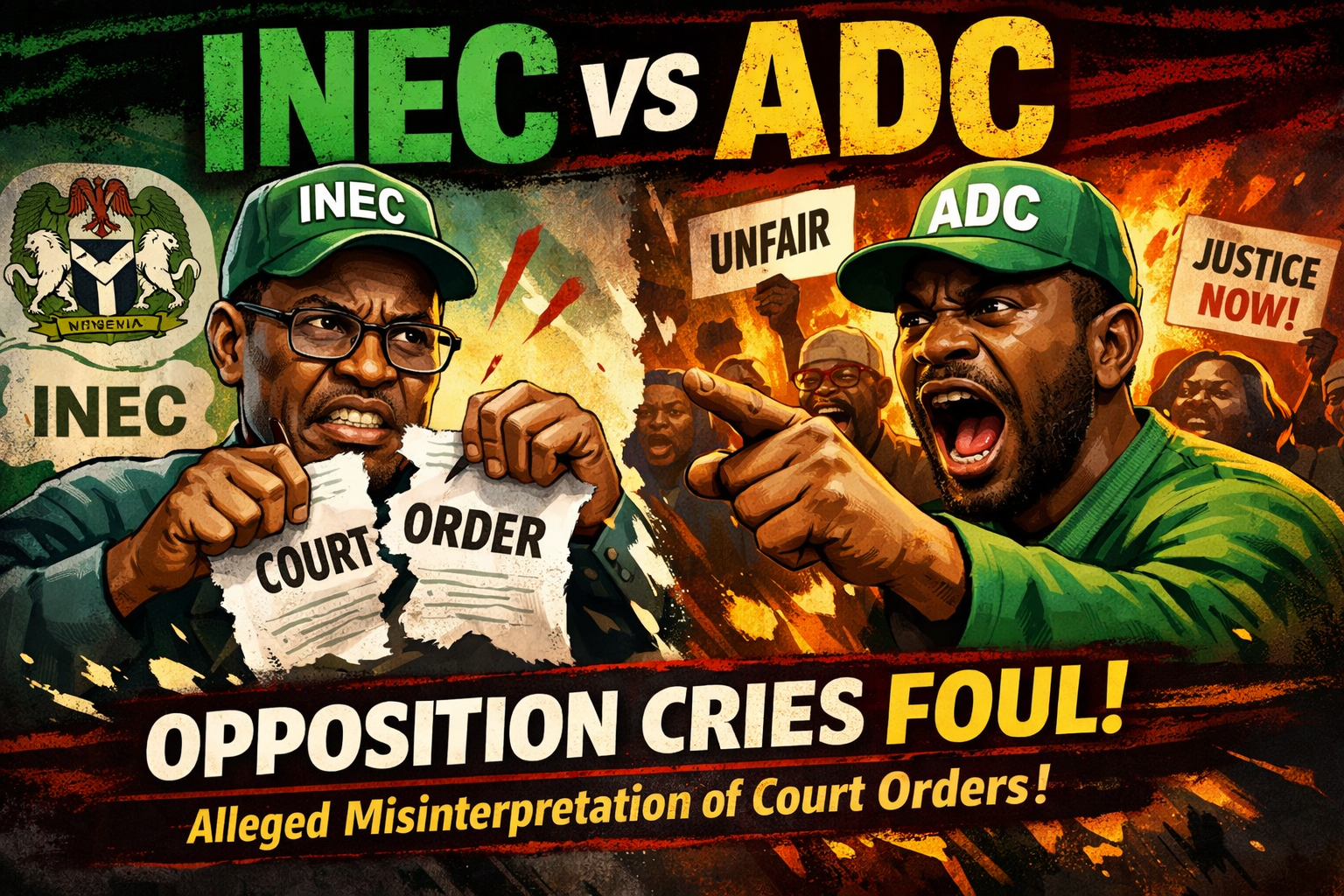
The political landscape in Nigeria is once again heating up, with the African Democratic Congress (ADC) raising serious allegations against the Independent National Electoral Commission (INEC). The ADC claims that INEC is deliberately misinterpreting court orders, a move they believe is designed to weaken opposition parties and undermine democratic processes. This development has sparked concerns among political observers and citizens alike, particularly as the nation gears up for future elections.
The Core of the Dispute: Misinterpretation or Deliberate Action?
At the heart of the controversy is INEC’s handling of recent court directives concerning the ADC. Leaders of the ADC have vociferously rejected INEC’s decisions, arguing that the electoral body’s actions go beyond mere administrative interpretation and venture into deliberate attempts to destabilize the party. This sentiment is echoed by various stakeholders who question the fairness and impartiality of INEC’s operations, especially when dealing with opposition factions. The ADC’s stance suggests a deeper struggle for political relevance and fair play within Nigeria’s multi-party system. For more on previous INEC-ADC disputes, see INEC Rejects ADC’s Call to Sack Prof. Amupitan.
Mobilization in Otukpo: A Sign of Growing Resistance
In response to what they perceive as an injustice, ADC members and supporters are reportedly mobilizing in Otukpo, a significant political hub. This mobilization effort underscores the party’s determination to challenge INEC’s authority and ensure their voices are heard. Such grassroots movements are crucial in Nigerian politics, often serving as a barometer for public discontent and a catalyst for change. The situation in Otukpo could be a precursor to broader protests if the issues remain unresolved. The ongoing internal crisis within the ADC has been a subject of concern, as highlighted in [APC vs. ADC: Blame Game Over Internal Crisis & Conspiracy](https://naira.blog/politics/apc-vs-adc-blame-game-over-internal-crisis-conspiracy/).
Implications for Nigeria’s Democratic Future
The allegations by the ADC against INEC carry significant implications for the future of Nigeria’s democracy. A perceived bias or misinterpretation of legal rulings by the electoral commission can erode public trust in the electoral process, potentially leading to voter apathy and political instability. Ensuring a level playing field for all political parties is fundamental to a healthy democracy. The current friction between the ADC and INEC highlights the urgent need for transparency, accountability, and strict adherence to the rule of law by all institutions involved in the electoral process. Concerns about the fairness of future elections have also been raised by legal experts, as discussed in Lawyer Challenges INEC’s Stance on ADC, Questions 2027 Election Fairness.
Conclusion
The unfolding conflict between the ADC and INEC is a critical development that demands close attention. The allegations of court order misinterpretation and efforts to weaken the opposition threaten the integrity of Nigeria’s democratic framework. As mobilization efforts gain momentum in places like Otukpo, the pressure on INEC to address these concerns transparently will undoubtedly intensify. The resolution of this dispute will not only impact the ADC but will also set a precedent for how electoral disputes are handled in Nigeria, ultimately shaping the nation’s democratic trajectory.