

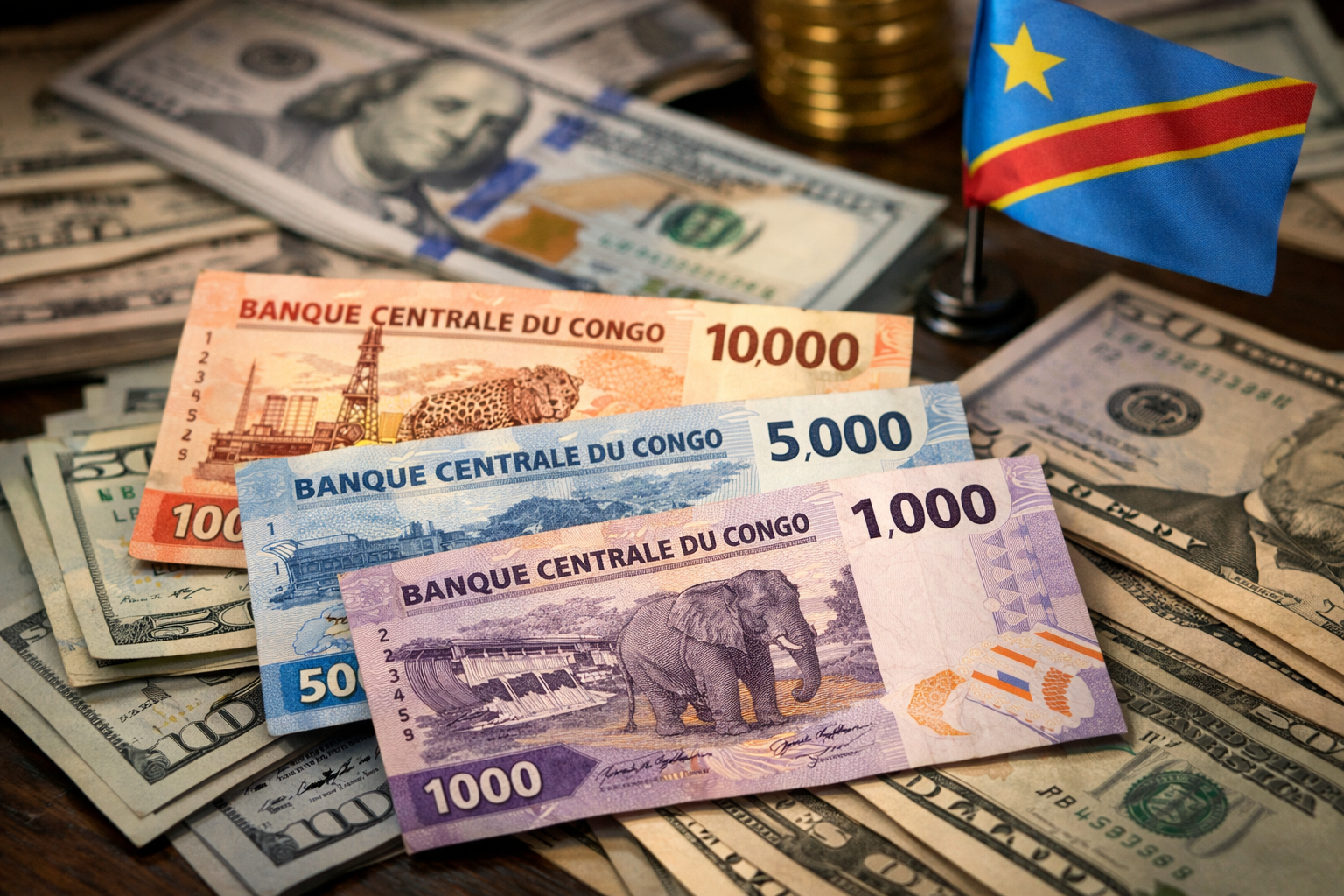
The Democratic Republic of Congo (DRC) has announced ambitious plans to ban the use of the US dollar in its economy, a move aimed at bolstering the national currency, the Congolese Franc, and asserting greater financial independence. This policy shift marks a significant step in the country’s ongoing efforts to reform its economic landscape and reduce reliance on foreign currencies.
The Rationale Behind De-dollarization
For decades, the US dollar has been the dominant currency in the DRC, used for everything from large commercial transactions to everyday purchases. While this provided a sense of stability, it also limited the central bank’s ability to implement effective monetary policy and control inflation. The government believes that by promoting the use of the Congolese Franc, it can gain better control over its economy, stimulate local production, and foster greater financial stability.
Challenges and Opportunities
The transition away from a dollarized economy is not without its challenges. Public trust in the local currency needs to be rebuilt, and measures must be put in place to prevent capital flight and ensure a smooth transition for businesses and individuals. However, the move also presents significant opportunities for economic growth and diversification. A stronger national currency could encourage local investment, reduce import costs, and enhance the country’s overall economic resilience.
Lessons from Other Nations
The DRC is not the first nation to attempt de-dollarization. Several countries, including Zimbabwe and Argentina, have experimented with similar policies with varying degrees of success. The key to a successful transition often lies in a comprehensive strategy that includes robust monetary policies, public awareness campaigns, and strong institutional support.
For more analysis on economic trends and policy changes across Africa, visit the business and politics sections on [naira.blog](https://naira.blog).
Conclusion
The DR Congo’s decision to ban the US dollar is a bold and potentially transformative economic policy. While the path ahead may be challenging, the potential benefits of a stronger national currency and greater financial sovereignty are substantial. The success of this initiative will depend on careful planning, effective implementation, and the cooperation of all stakeholders. Stay informed about major economic shifts and their impact on the African continent by following [naira.blog](https://naira.blog).