

Introduction: The Growing Debate on Presidential Presence
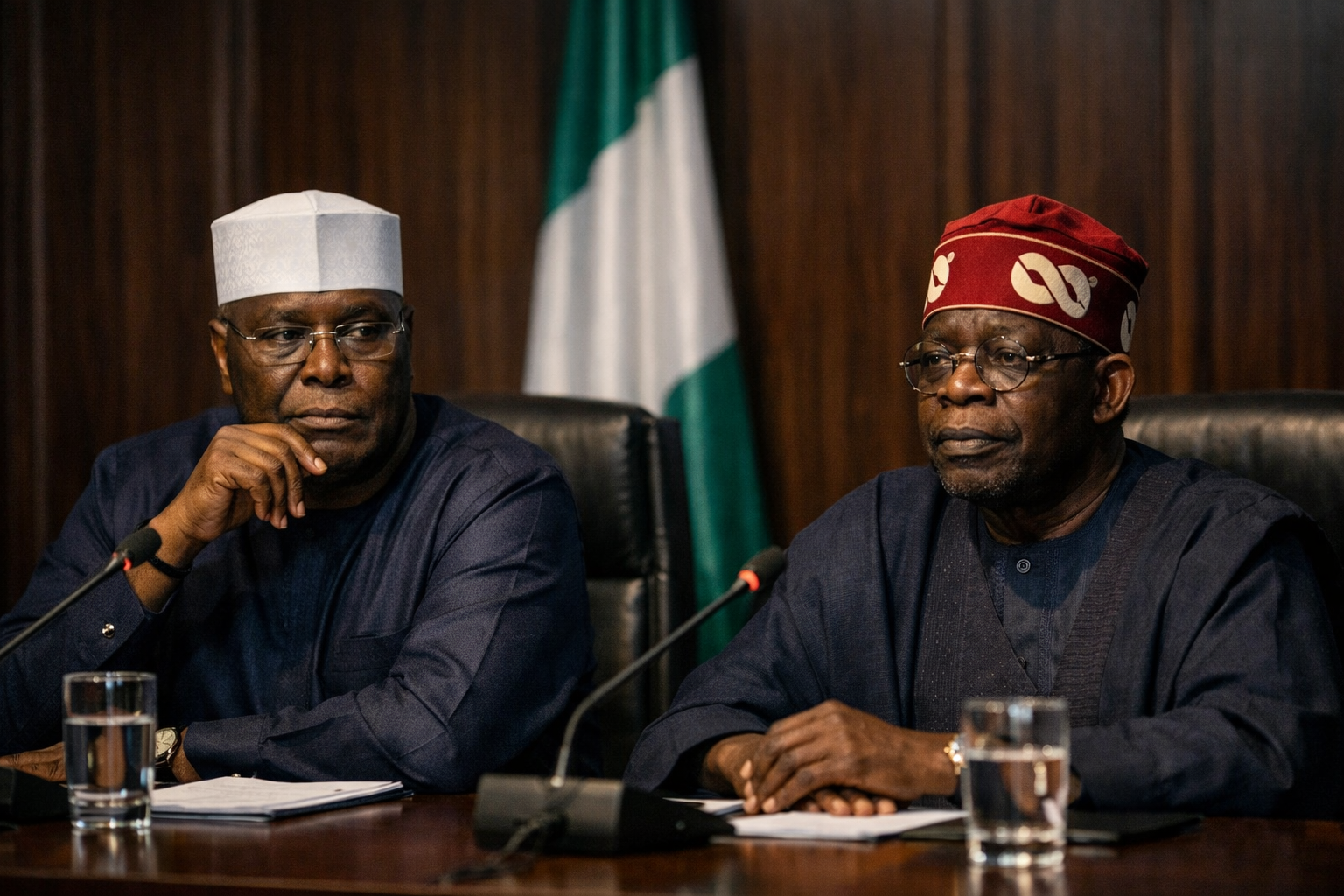
Former Vice President Atiku Abubakar has recently intensified his critique of President Bola Tinubu, highlighting what he describes as a
“disturbing pattern of absentee leadership.” This critique comes in the wake of a series of brief public appearances and missed engagements by the President in Lagos and Plateau states. The former vice president’s camp, through Senior Special Assistant on Public Communication Phrank Shaibu, has described the president’s recent conduct as “troubling and unacceptable,” specifically noting a perceived lack of empathy following recent security breaches. For more on political accountability, visit naira.blog/political-accountability.
The Plateau State Visit: A Point of Contention
A primary point of contention in the statement was the president’s recent trip to Plateau State, which came on the heels of a devastating terrorist attack. Shaibu described the visit as “shockingly brief and perfunctory,” noting that the president “spent barely 10 minutes at the Jos Airport before departing, an act widely perceived as dismissive of the gravity of the tragedy.” The statement argued that the justification for the short visit, that the president needed to reach Lagos for official engagements, has been “rendered hollow” by subsequent events. Learn more about national security challenges at naira.blog/national-security.
The Lagos Visit: Absence over Participation
According to the Atiku camp, the president’s two-day working visit to Lagos State has been defined more by his absence than his participation. Shaibu claimed that since arriving, the president has remained “largely confined to his private residence, with little to no visible engagement in the very activities meant to validate the so-called working visit.” The statement pointed to the commissioning of the Opebi–Mende–Ojota Link Bridge and the inauguration of a Multi-Agency Complex as events the president missed. Shaibu noted that Tinubu “failed to personally attend, instead delegating these significant national duties to the Senate President, a close political ally.” Explore more about governance and leadership at naira.blog/governance-leadership.
Broader Concerns: Security and International Relations
The statement linked the Tinubu’s perceived detachment to broader concerns, including “recent precautionary actions taken by the United States Government regarding its personnel in Nigeria.” Shaibu stated, “At a time when Nigeria is grappling with worsening insecurity, rising terrorist attacks, and growing international concern, such indifference at the highest level of leadership is both alarming and indefensible.” He described the administration as “a presidency that appears detached, disengaged, and disturbingly casual about the weighty obligations of governance.” For further reading on international relations, visit naira.blog/international-relations.
Conclusion: A Call for Re-engagement
The Atiku camp has called on President Tinubu to urgently recalibrate his approach to governance, re-engage fully with the demands of his office, and demonstrate the seriousness of purpose required to confront the daunting challenges facing the nation. “Anything less would amount to a grave disservice to the Nigerian people,” Shaibu said. This critique underscores the ongoing debate about the nature of leadership and accountability in Nigeria’s political landscape. For more insights into political developments, visit naira.blog/political-developments.