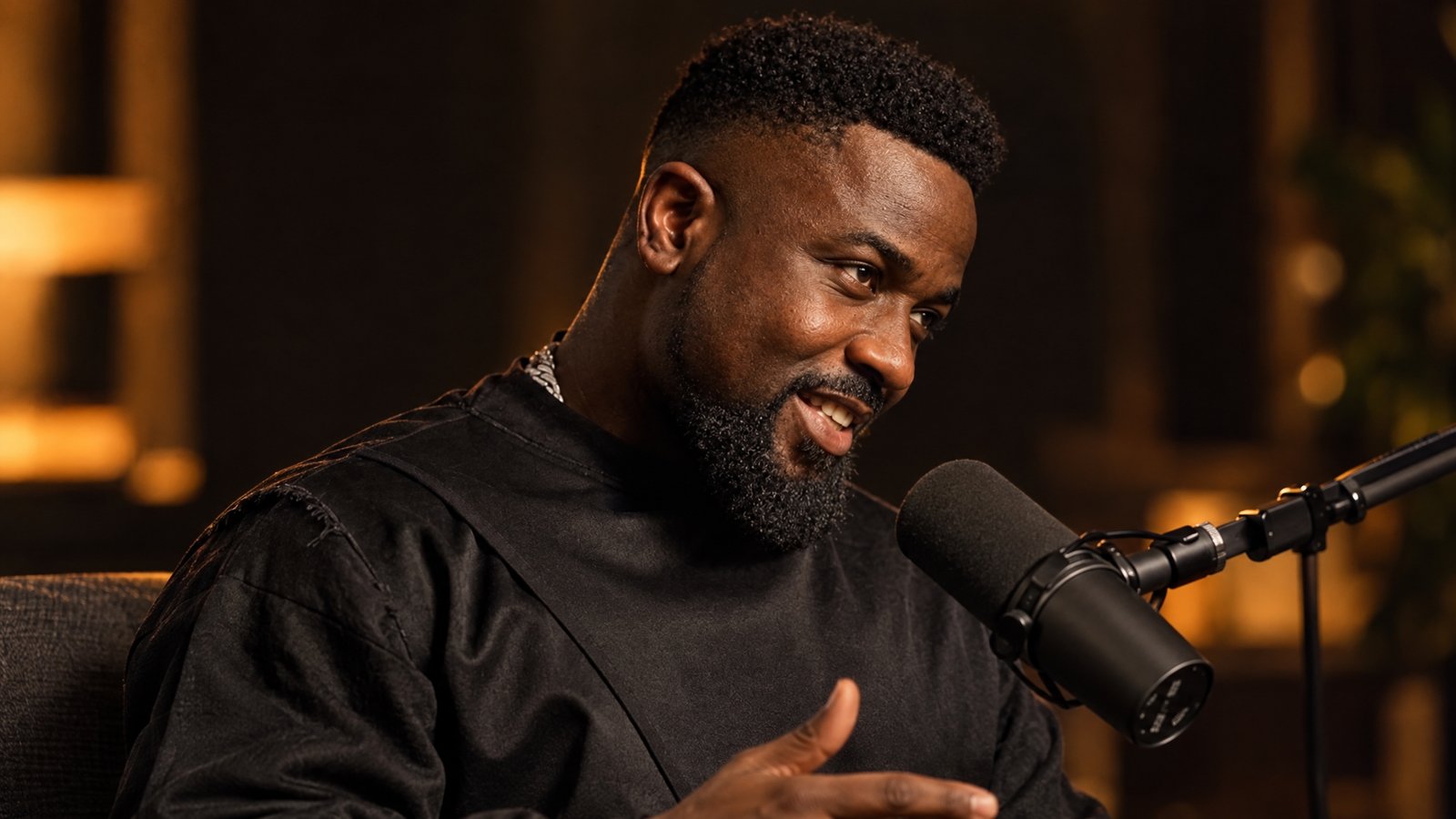
Some of the sharpest things said about Nigerian and Ghanaian music in recent years have come out of podcast chairs rather than press conferences. Sarkodie, one of Ghana’s most successful exports, sat down for an episode of The Fuse and made a claim that should have been bigger news than it was: he started rapping in English, and he always felt smaller doing it.
“I started rapping in English but felt like I was beneath someone when I rap in English. But when I rap in Twi, I feel equal to any other rapper in the world,” he said. The follow-up line is the one that has stayed with people: “Rapping in Twi is my superpower. I express myself way better in my mother’s tongue. The emotions I want to put out come out best when I rap in my native language.”
It sounds like an artist talking about craft. It is actually an argument about money.
From the global language to the mother tongue
Sarkodie is not new to this road. He began his career rapping in English, then moved the work back into Twi, and the switch was not a rejection of international ambition. It was a search for the place where his delivery actually landed. The complaint he raised on The Fuse was never about English being a bad language. It was about what English made him feel while he was using it: smaller, less equal, one rung below the artists he was sitting next to in the global conversation.
That is a distinction worth sitting with, because it changes the frame. Sarkodie is not saying English is inferior. He is saying that in English he was performing confidence he did not feel, and in Twi he was simply being himself. For an artist whose whole job is delivery – tone, wordplay, cadence, punchlines that need a shared reference point – that is not a small thing. It is the difference between a record that travels and a record that connects.
Why the language question is suddenly a business question
There was a time when the commercial logic was simple and brutal. If you wanted a bigger audience, you rapped in English. Local languages were treated as a career warm-up, something you did before you moved to the language of the market. That logic has been thoroughly dismantled, and the evidence is everywhere: the biggest songs in Nigeria now arrive in Yoruba, Igbo, Hausa and Pidgin, and they chart globally without anyone translating a word.
The economics have followed the culture. The people who win are no longer only the ones who can sound international; they are the ones who own a large domestic audience and let the world come to them. It is the same argument the Headies founder made about artists chasing foreign awards – the local audience is where the volume is, and the volume is where the leverage is.
At the same time, the money that pays the bills is still largely international. International bookings pay international money. Davido’s reported $500,000-per-show demand for a joint tour is what a career at the top of the market looks like in hard currency. Nathaniel Bassey’s billion-view gospel run shows the other route: build an audience at home on a subject everyone already cares about, and let the views travel on their own.
The argument this restarts
So which side of the argument is Sarkodie on? His answer is quietly a third position. He is not anti-English, and he is not anti-global. He is saying that an artist who sounds most like himself at home has a stronger foundation to build from, and that the international market will find that version eventually.
The counter-argument is familiar: rapping in a local language caps your addressable market, and local-language records can be harder to place with the distributors and playlist editors who decide who breaks in Europe and America. Mr Eazi’s claim that he saved Afrobeats in 2016 is relevant here, because the debate about what actually built the genre’s international audience is still not settled. Was it the Afrobeats template, or was it a generation of artists who made their own local languages work globally?
Most careful listeners land somewhere in between: language builds the base, English builds the door, and an artist who can move between the two is simply harder to pin down than a market can.
What Nigerian listeners will take from it
For Nigerian artists and fans, the conversation lands differently than it does in Accra. Here, the argument about rapping in your own language has largely been settled in practice: the biggest names in the country release in Pidgin, Yoruba and Igbo without apology, and the local audience decides who is relevant. Sarkodie’s experience – a man who had to argue his way back to his mother tongue – is the version of the debate that Nigerian artists who already rapped in their mother tongues probably never had to have.
It also puts a question to the industry that is larger than one artist. If a global audience now rewards music that sounds like where it came from, then the bottleneck is no longer talent or reach. It is packaging, distribution and the paperwork that lets a creator own what they make.
Conclusion: the song is the argument
The most useful thing about Sarkodie’s remarks is that they are not a manifesto. They are an artist’s account of where his confidence lives, delivered plainly and without a lecture. “I feel equal to any other rapper in the world” is not a claim about language, it is a claim about the audience sitting in front of him.
That is the whole business, in the end. The artists who win are the ones who sound like themselves to somebody and like a market to everybody else. Sarkodie has simply been honest about which of the two comes first for him – and, judging by the reaction to the episode, a lot of people were waiting to hear somebody say it.