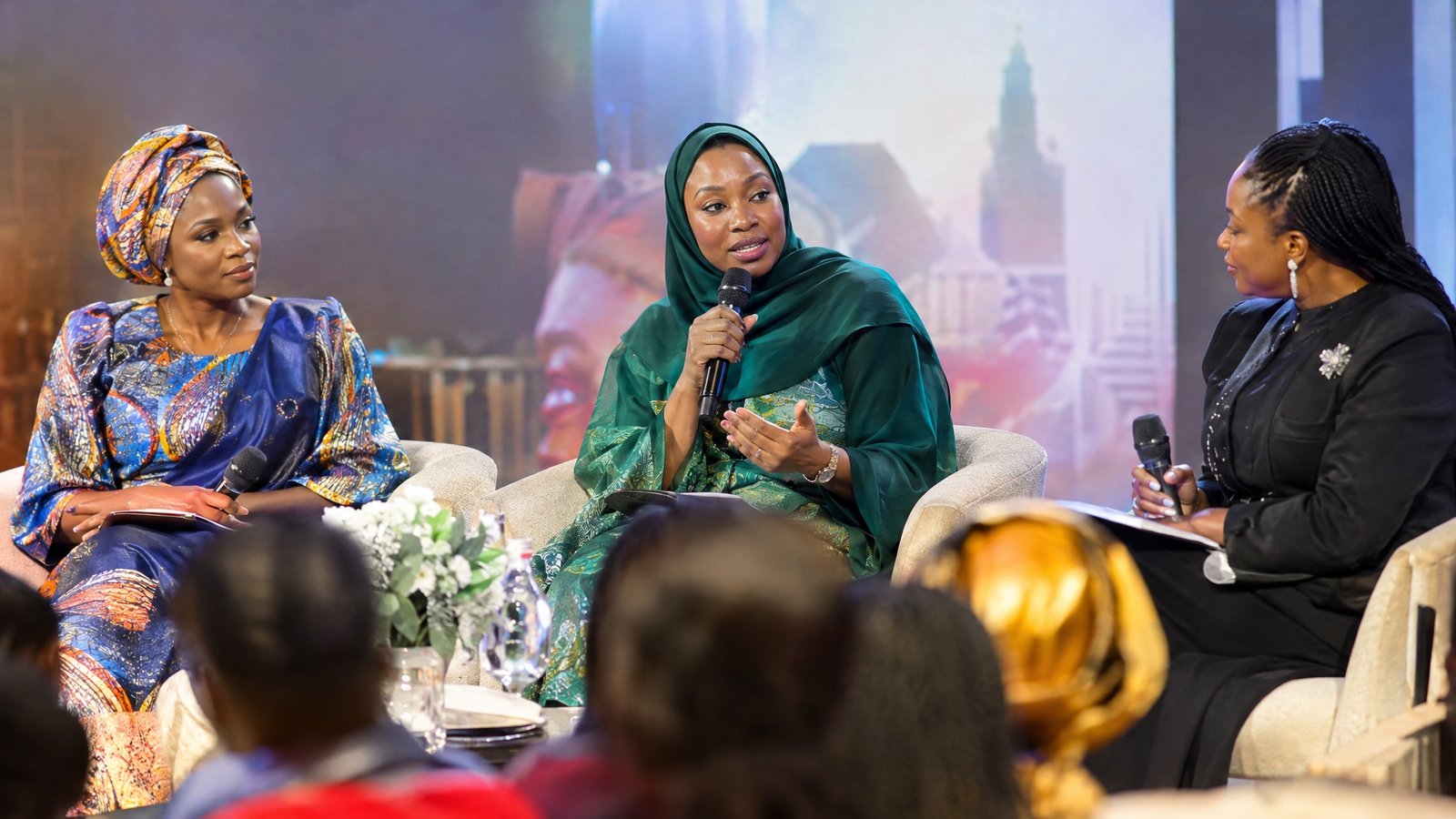
The room where money meets conviction is usually full of men in dark suits, and it is exactly the imbalance that the 2026 FinTribe Finance Fair set out to break. This year’s gathering, built around the theme ‘I CAN’, brought women together with financial institutions, investment professionals, the Nigerian Exchange Group, entrepreneurs and founders — all of them talking about one thing that Nigerian women have been told for too long to wait for: financial independence.
Here is what happened, and more importantly, what you can do with it whether you were in the room or not.
Who FinTribe Is and How Big It Has Got
The organiser is FinTribe, founded by Jennifer Awirigwe, and the numbers she shared are the first thing worth sitting with. The community now spans women in 47 countries who have collectively invested more than $8 million.
Awirigwe was careful about how she described what that number means. The organisation has also ventured into real estate, expanded the World Women’s Academy, and recently launched a mobile application pulling learning resources, investment opportunities and community conversations into one place. But the metric she reached for first was not the money in the room. It was what changed in the women who left it.
“For me, however, the most important measure of our success is not the number of people in the room. It is the woman who has made her first investment, the woman who has started her business, and the woman who has finally gained the financial confidence to take that important step.”
That is a deliberate rejection of attendance as a scoreboard, and it reframes what a financial gathering is actually for.
Why the Theme Was ‘I CAN’
Awirigwe said the theme was designed to challenge the limiting beliefs that stop women from pursuing financial opportunities, owning property and building generational wealth. That last phrase carries weight in a country where land and property remain the most reliable store of value for many families, and where the share of that asset class held in women’s names is still a standing argument.
Her practical advice to the room was less about a product and more about behaviour: engage with the experts present, visit the exhibitors, ask the questions, then translate whatever you learned into an actual financial decision. The gap between attending and acting was the point.
The Exchange Regulator’s Warning: Access Is Not the Same as Use
Olufemi Shobajo, chief executive of NGX Regulation Limited, commended FinTribe for keeping the conversation around financial inclusion, investor education and the development of Nigeria’s financial ecosystem going, and reaffirmed his organisation’s partnership with the fair.
His central point is the one regulators keep making and most people never hear: having a bank account and financial products available to you is not the same as being equipped to use them well. The infrastructure can be fully in place and still leave people unable to act, because nobody closed the knowledge gap. That is a more uncomfortable claim than a new product launch, and it is a more useful one.
The Advice From the Stage That Actually Sticks
Nollywood actress and entrepreneur Bamike ‘BamBam’ Olawunmi-Adenibuyan took the floor with the argument that personal development is the highest-yield investment available.
“You are your greatest investment. Once you invest in yourself, wherever you find yourself in the world, you can reproduce the value of everything you have poured into yourself.”
It is a simple line, but it carries a specific strategy: skills are the only asset that travels, that appreciates rather than depreciates, and that can be converted into any other asset later. A house cannot be moved. A certificate can.
What To Do If You Were Not There
Most readers were not in that room, and the useful part of this report is what transfers to your phone.
Start With the Account You Already Have
There is no application for most of what was discussed. The most common starting point in Nigeria is simply paying attention to what your existing savings are doing. Understanding where your money sits, what it earns and what fees are quietly draining it is the beginning of financial literacy. We have covered the mechanics of how Nigerian women build careers that compound, and the same discipline applies to money.
Own Something, Even if It Is Small
The theme was about first steps, not large sums. Property was mentioned as a vehicle for generational wealth, and the practical entry point for most women is a fixed deposit, a treasury instrument or a small, deliberate purchase of something they can resell later. The discipline of buying land safely in Nigeria is the same discipline, scaled down.
Make Your Business Legally Visible
Several speakers were entrepreneurs, and the recurring theme was that a business which exists only informally cannot access the capital, contracts or grants that let it grow. Our step-by-step on registering a business with the Corporate Affairs Commission covers the part that usually stops people before they begin.
Invest in the Skill First
If you take one thing from the stage, take the self-investment argument. Before you chase the next return, ask what one skill would do for you in the next twelve months — a certification, a language, a technical skill you can bill for. We have looked at how to start a podcast in Nigeria and monetise it, which is one of the cheapest ways to build an audience and a skill at the same time.
The Bigger Picture: Money and Access in Nigeria
Events like this tend to be read as feel-good affairs, and they are not nothing. But the conversation sits inside a larger argument about who the financial system is built for. The criticism that Nigerian wealth creation is too narrowly distributed, that capital reaches a small circle of insiders, and that the rest are served or not served rather than enabled, is a live debate.
There was an uncomfortable version of that debate at a Lagos lecture this week, where former Afreximbank chief Benedict Oramah argued that African economies must stop copying foreign models designed for other circumstances, mobilise local capital and build home-grown solutions. The number he put on it was stark: somewhere between $350 billion and $500 billion of Africa’s foreign exchange reserves sit outside the continent, even as African countries struggle to access credit from foreign institutions. That is the structural version of the same problem, and the FinTribe fair is the individual version.
Both conversations are worth having. One without the other is incomplete — individual confidence does not move a $500 billion flow, and structural reform does not put a single naira into a woman’s account on a Tuesday morning.
Conclusion
The 2026 FinTribe Finance Fair was a real gathering with a real argument underneath it: that financial access in Nigeria is not the problem, financial agency is. Awirigwe’s number, $8 million invested by women across 47 countries, is meaningful. Her measure of success, the woman who made her first investment, is more meaningful still, because it is the one that scales one household at a time.
Next time an event like this comes round, the play is clear. Go, take notes, then close the laptop and make one decision — open the account, register the business, buy the land properly, or learn the skill. Financial independence is not built by watching other people do it. It is built by the first small move you make yourself, and we will keep tracking the Nigerian stories that make those moves possible on naira.blog’s events coverage.