

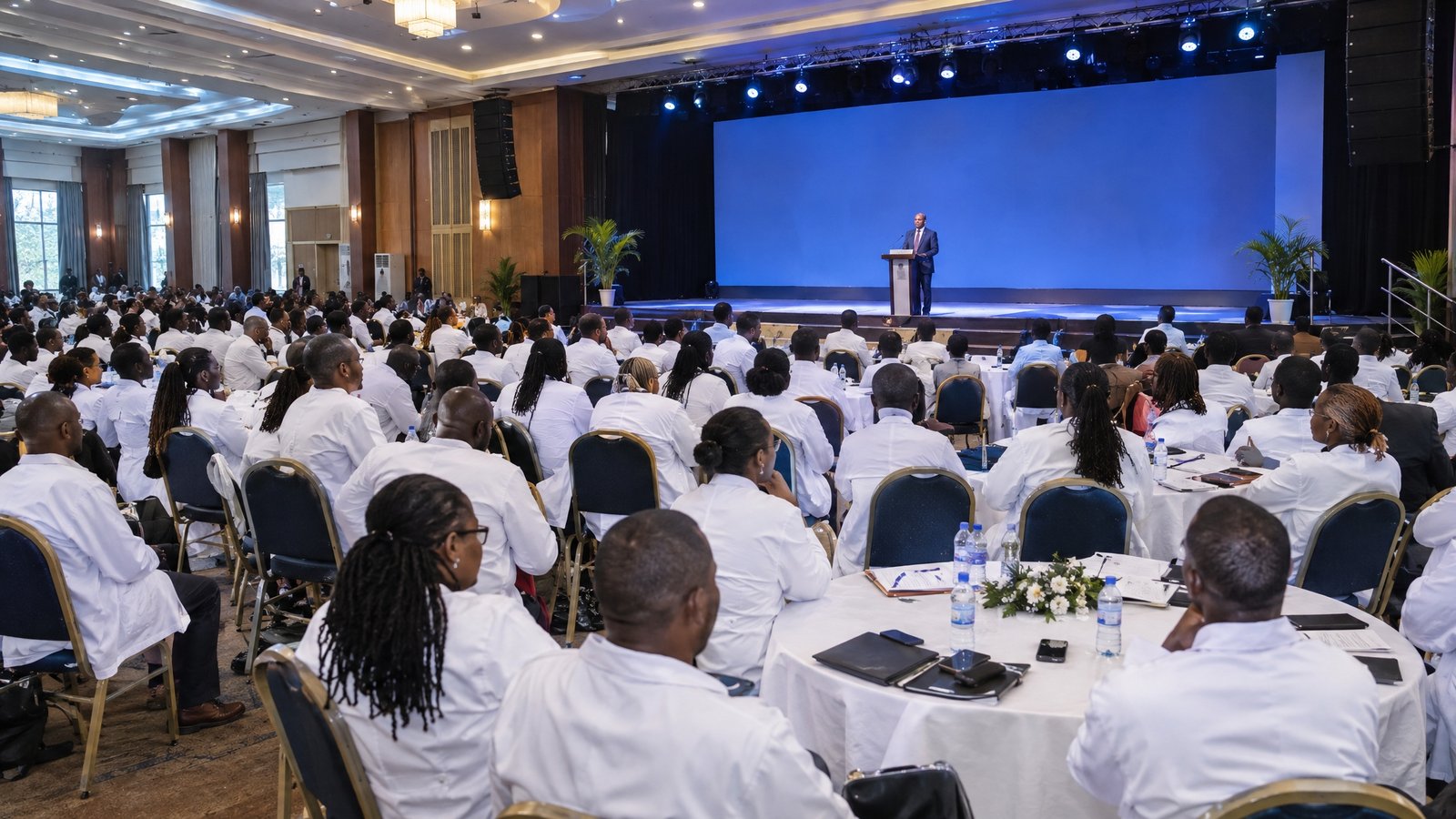
The Pharmaceutical Society of Nigeria’s 99th Annual National Conference opened in Awka on Tuesday with a governor on the stage asking pharmacists to join hands with his administration to crack down on fake and counterfeit drugs and to shut down shops that pretend to be pharmacies. The society’s president, Ayuba Ibrahim, was on hand to present an award of excellence to the same governor. That is the shape of the event: a professional body asking the state for enforcement muscle, and a state using a national conference to make a public promise on health.
Here is what the conference actually was, who it was for, and what changes for an ordinary customer standing at a counter in Awka, Enugu or Aba.
What the event is
The gathering was held at the International Convention Centre in Awka, Anambra State, and carried the tag “Ijele 2026” — Ijele being the Igbo term for a masquerade festival, which the conference borrowed as a signature. Its theme was “One health, One pharmacy: Bridging knowledge, practice and policy for national impact.”
Governor Chukwuma Soludo declared it open and welcomed delegates by describing Anambra as “Nigeria’s pharmaceutical headquarters.” The conference is the profession’s annual national gathering: pharmacists in practice and in training, regulators, industry representatives, students and policymakers in one room for several days of papers, panels and professional business.
Events like this are not always headline material, but this one has a working precedent on this site — the Worldview Education Fair that connected Nigerian students with global opportunities shows how a well-run industry conference can change what people do next, rather than merely filling a hall.
The promise that matters at the counter
Soludo’s request was specific in a way that most political statements about health are not. He asked the society to work with the state to strengthen regulation, to police the operations of its own members, and to eliminate fake shops posing as registered pharmacies. That last clause is the one that reaches the person buying medicine.
The reason it is so serious is that two separate regulators are involved, and neither is optional. The Pharmacists Council of Nigeria regulates the training and practice of pharmacists and the registration of pharmacy premises, while the National Agency for Food and Drug Administration and Control oversees the medicines themselves. A shop can look perfect and still be unlawful. The signal that tells you it is registered is the premises registration and the presence of a qualified pharmacist — which is exactly what the case of an unregistered attendant performing surgery in Cross River laid bare, and what the enforcement push in Ondo against unverified alcohol sales after 30 deaths was really about.
That is why this conference sits alongside a national argument about the contested pharmacy regulation bills before the legislature, and why the work of the regulator on the ground — the enforcement that pushed new salt limits on manufacturers — matters as much as the conference speech.
The numbers the governor put on the table
Two of his claims were about Anambra’s public health record rather than pharmacy, and both were numbers worth checking. He said reforms in public education, including free schooling from kindergarten to secondary level, had cut the out-of-school children rate to 0.25 percent, the lowest in the country. He said the free antenatal care programme had served more than 250,000 pregnant women and supported over 900 free caesarean deliveries.
He also used the conference to promote industrial policy: a dedicated pharmaceutical hub in Oba is under way, and a Coordinated Wholesale Centre is expected to be completed early next year. For a state that calls itself the country’s pharmaceutical headquarters, building the wholesale side of the trade is the logical next move — and for the small pharmacy on a neighbourhood street, a better-supplied wholesale market is the difference between waiting weeks for a common drug and getting it on Tuesday.
Why an event in Awka concerns a patient in Lagos
Because medicine does not stay in the state that dispensed it. A drug bought over the counter in Surulere can have travelled through a chain of distributors that started hundreds of kilometres away, and nobody at the counter sees any of it. That is why national conversations about substandard medicines need enforcement that runs through the states, and why a governor promising to police pharmacy premises is not a small story even if it happens at a conference.
It is also why the national body matters. A pharmacist who behaves badly in one state still carries a professional reputation that travels with them, which is the argument behind the request that the society police its own members’ operations rather than waiting for outsiders to do it.
Conclusion
The 99th PSN conference in Awka will be remembered for a slogan about joining hands. The useful question is what happens in the months after it, in the pharmacies of Anambra and beyond, when a regulator’s file is opened, a premise is inspected and a shelf is checked against a register.
Three things to watch. Whether the state publishes a list of registered pharmacy premises that ordinary people can check. Whether unlicensed outlets found operating are closed rather than quietly warned. And whether the wholesale hub and the Coordinated Wholesale Centre actually open on the schedule that was announced, because cheaper and more reliable stock is what keeps small pharmacies open.
Until then, the practical advice costs nothing: buy from a shop with a visible registration and a pharmacist present, keep receipts, and report suspected counterfeits rather than quietly returning the medicine and buying again. Conference resolutions fade. Registering a premise does not.