

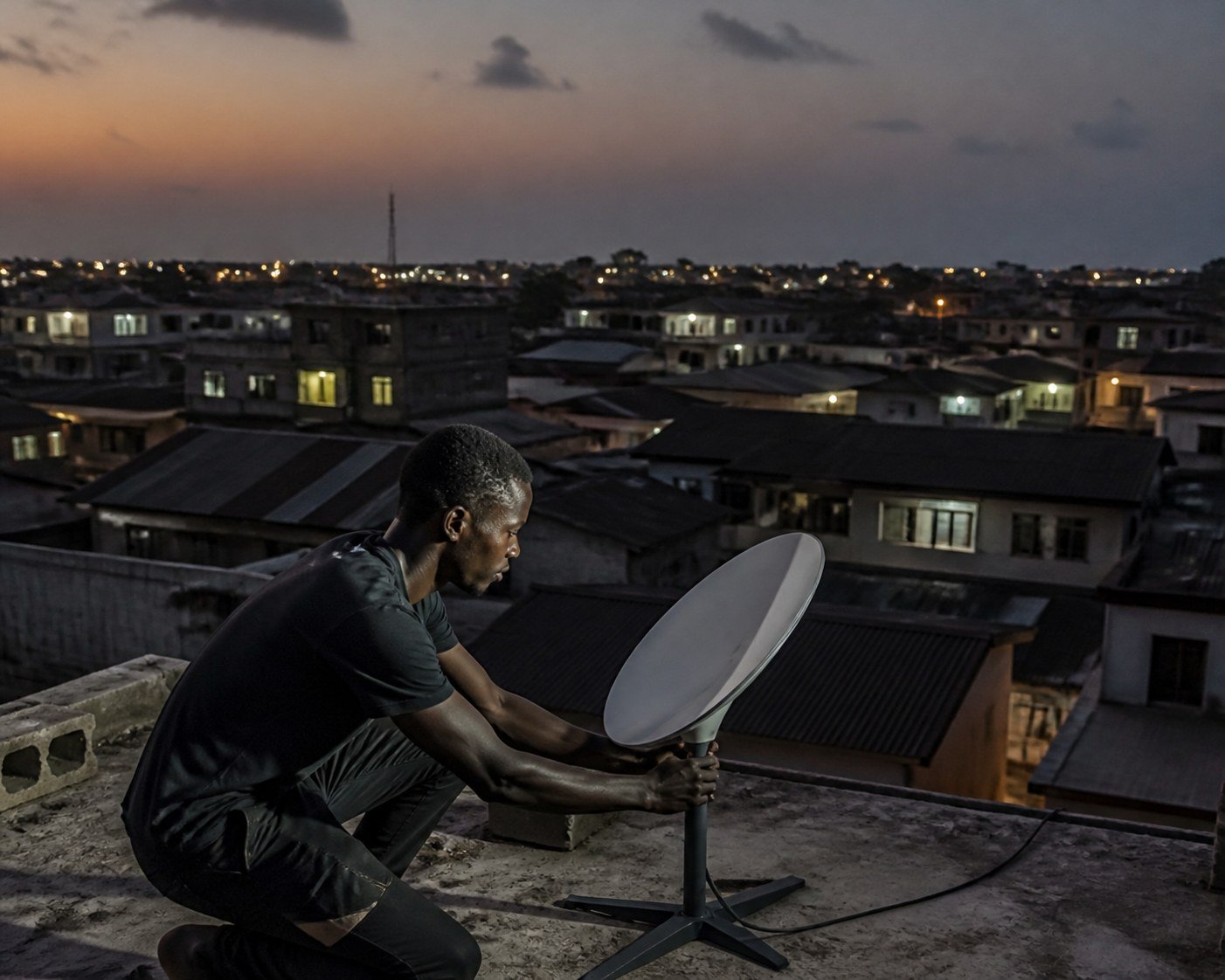
Ask any Nigerian what frustrates them most about daily life and “internet” will finish in the top three. Data that vanishes mysteriously, networks that crawl at night, fibre that never quite reaches your street. That is precisely why Starlink, the satellite internet service, found such a warm welcome in Nigeria. But warmth aside, the real question is mathematical: does it make sense for your pocket in 2026?
What Starlink Costs in Nigeria Right Now
Starlink’s standard residential plan is officially listed at ₦57,000 per month in Nigeria. That figure already tells a story: the price began far lower, and a naira-driven adjustment in 2025 pushed it up by half — a reminder that naira-denominated satellite pricing moves with the exchange rate. The hardware kit is a separate upfront cost that has bounced around between promos and kit types, generally landing somewhere between roughly ₦400,000 and ₦700,000. Check the current kit price on Starlink’s Nigeria page before planning around a number a friend quoted last year.
The standard residential plan has also carried a fair-usage policy around 1TB of data per month — generous for a household, but worth knowing before anyone dreams of running a business centre on it.
How It Compares With the Local Options
Every household’s answer differs, so here is the honest picture across the three routes most Nigerians consider:
| Option | Typical upfront | Typical monthly | Best for |
|---|---|---|---|
| Starlink (satellite) | Kit from several hundred thousand naira | ₦57,000 official residential rate | Areas with poor coverage; heavy users; remote workers |
| Fibre ISP | Often modest or waived on promos | Roughly ₦10,000–₦60,000 by speed | Streets already covered by fibre; best value per GB |
| 4G/5G router | Router plus battery/solar setup | Roughly ₦10,000–₦40,000 in data | Flexibility, renters who move often |
Prices on the local side vary widely by provider, building and promotion — treat the table as a map, not a quote, and confirm current offers before committing.
When Starlink Makes Sense
- Your area has no decent fibre or fixed network — satellite coverage does not care about your street’s infrastructure
- You earn in dollars or run a remote job where connection failures cost real money; one missed call can cost more than a month of service
- You run a small office or creative studio that uploads large files daily and needs stable latency
- You have tried every local option and your complaints log is longer than your data balance
When It Does Not
- Reliable fibre already reaches your building — local fibre at a fraction of the monthly price will usually beat satellite on value
- You are a light user who streams, scrolls and attends the odd call; that usage does not justify the kit outlay
- Every naira is budgeted — if the kit would drain your emergency fund, the decision makes itself. Our smart money guide for 2026 is a good companion for weighing it
Questions People Ask Before Buying
Does rain affect it?
Heavy rain can cause brief slowdowns or dropouts on satellite connections — a known trait of the technology. For most users it is an occasional irritation, not a daily one, but plan a small backup such as a mobile data bundle.
Can I share the cost with neighbours?
Many Nigerian households do exactly that: one kit, split across three or four flats, each contributing to the subscription. It works well when the router sits centrally and the users are friendly ones.
Is it good for students and online learners?
Stability helps, but students do not need satellite money to learn online — the federal government has zero-rated data on approved educational platforms, which our report on zero-rated learning data explains, and that changes the maths for studying on a budget.
Final Word
Starlink in 2026 is no longer a curiosity; it is a proven option with a proven price. Whether it is right for you comes down to three things: what your local alternatives actually deliver, what your internet time is worth, and whether the upfront kit fits your budget without stress. Run the numbers honestly — and if the honest answer is “not yet”, invest the difference instead: our beginner’s guide to investing in Nigeria and the broader cost of living picture for 2026 will show you where it goes further. For those whose income already depends on the internet, our guide on making money online in Nigeria is worth reading alongside this decision.