

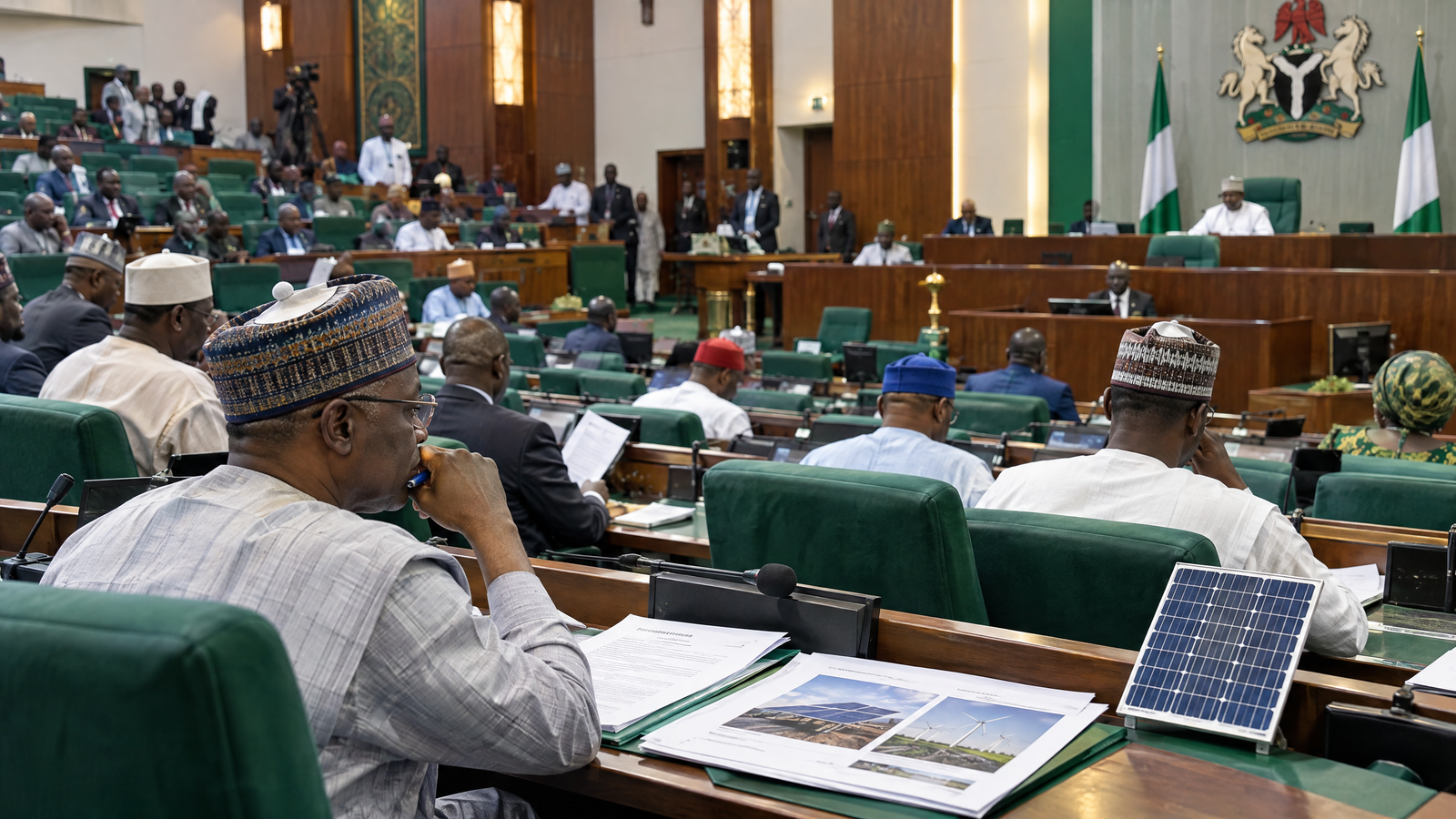
Nigeria’s power conversation is moving beyond the familiar question of generation. A proposal before the House of Representatives is now asking whether the country needs a dedicated institution to coordinate renewable energy, especially as households, businesses and communities increasingly look for alternatives to an unreliable grid.
What the bill proposes
The Electricity Act (Amendment) Bill, 2025, sponsored by Afam Ogene of Ogbaru Federal Constituency, Anambra State, has passed second reading. Its central proposal is the creation of a National Authority for Renewable Energy, known as NARE.
The proposed authority would coordinate the development, promotion and regulation of renewable-energy projects. The plan also contemplates moving specified responsibilities currently handled by the Nigerian Electricity Regulatory Commission, the Rural Electrification Agency and the Rural Electrification Fund into the new framework.
A proposed funding role
One of the bill’s notable provisions is a proposal that 40 per cent of annual Rural Electrification Fund resources should be channelled to the new authority. That is a proposal, not an existing transfer, and it would still face committee review and further legislative steps.
Supporters of the idea see a chance to give solar, mini-grid and other decentralised projects a clearer institutional home. For consumers, the practical test will be whether any new structure can shorten the distance between policy decisions and power delivered to homes, schools, clinics and small businesses.
The questions that remain
Creating another agency would not automatically solve Nigeria’s electricity problems. Lawmakers will still need to define how NARE would work with existing regulators, avoid overlapping mandates and protect public funds from administrative waste.
The proposal also arrives as Nigerians keep searching for ways to manage energy costs. Recent pressure on household budgets has made the wider power debate more urgent, alongside changes in fuel pricing and energy markets and the rising cost of fuel and cooking gas.
Next step for the proposal
The bill has been referred for further scrutiny. That stage will be important because committee deliberations can clarify the authority’s powers, funding rules and relationship with institutions already working in the electricity sector.
For now, the development signals that renewable energy is becoming a central legislative issue rather than a side conversation. Whether the idea becomes law will depend on the quality of that scrutiny and the ability to turn a proposed structure into measurable service improvements.