
Escalation in the Middle East: Trump Orders a Naval Blockade Stay updated on global political news.
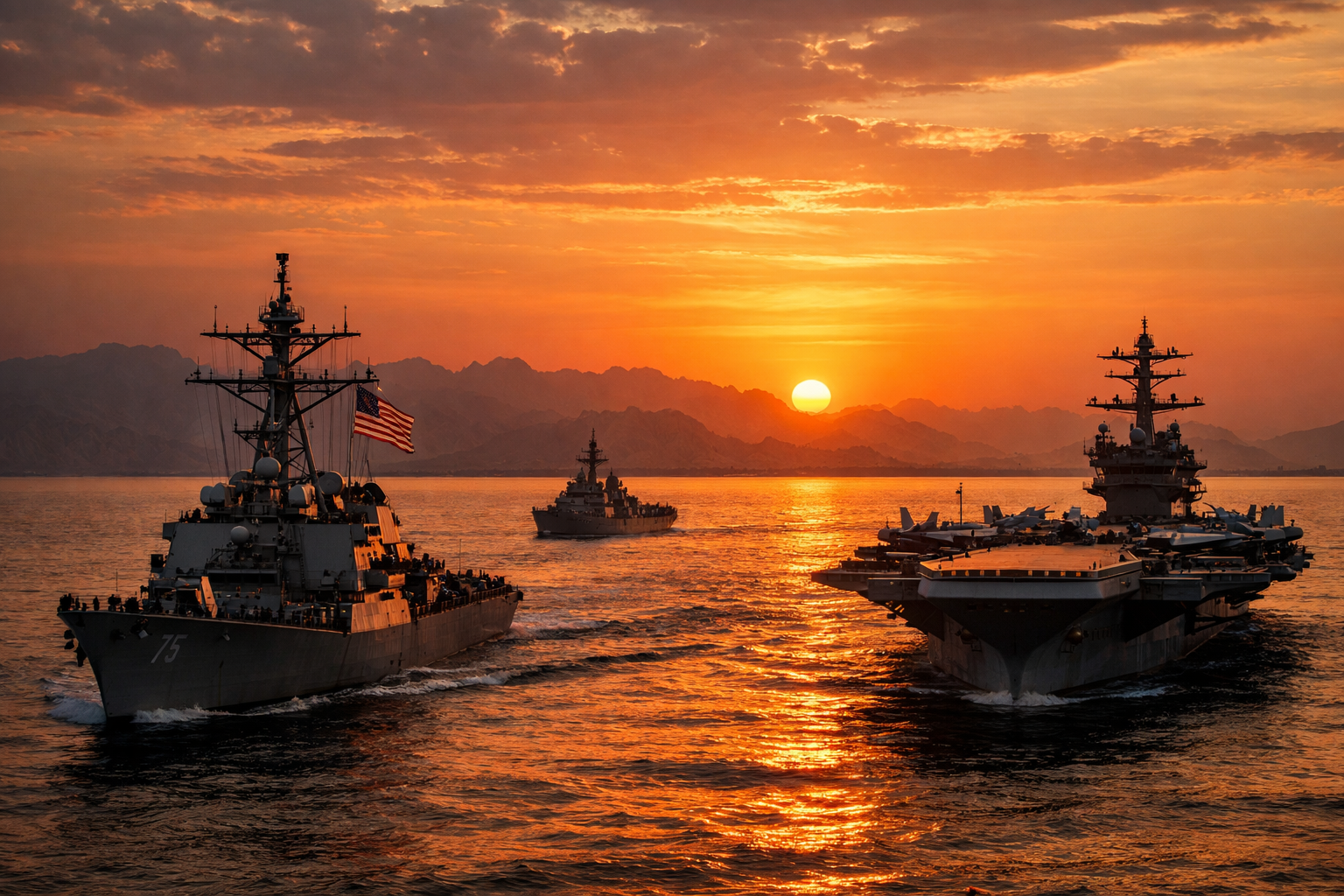
President Donald Trump has officially ordered a US naval blockade of the Strait of Hormuz, a move that has sent shockwaves through the international community. The President’s decision follows a series of failed ceasefire talks with Iran, which ended without an agreement. Explore our latest analysis on the Iran-US conflict.
The Strait of Hormuz is one of the world’s most critical oil transit routes, with approximately 20 percent of the world’s oil passing through it. A blockade of the strait could have devastating consequences for the global economy and oil supply. Learn more about the impact of oil supply disruptions.
Iran’s “Strong Response” to the Blockade
In response to the President’s order, Iran’s Islamic Revolutionary Guard Corps (IRGC) has issued a dire warning. The IRGC stated that any military vessels approaching the Strait of Hormuz would be considered a violation of the fragile ceasefire and would face a “strong response.”
The escalation of tensions between Washington and Tehran has raised fears of a full-scale military conflict in the region. The blockade is seen as a major provocation by Iran, which has consistently threatened to close the strait in the event of an attack or a blockade.
The Global Economic Impact
The potential disruption of the global oil supply has already caused concern in the energy markets. Analysts suggest that a prolonged blockade of the Strait of Hormuz could lead to a significant spike in oil prices, affecting everything from transportation costs to the price of consumer goods.
As the situation continues to unfold, the world is watching closely to see how the international community will respond to the President’s order. The coming days will be crucial in determining whether the blockade will lead to a diplomatic resolution or a military confrontation.