

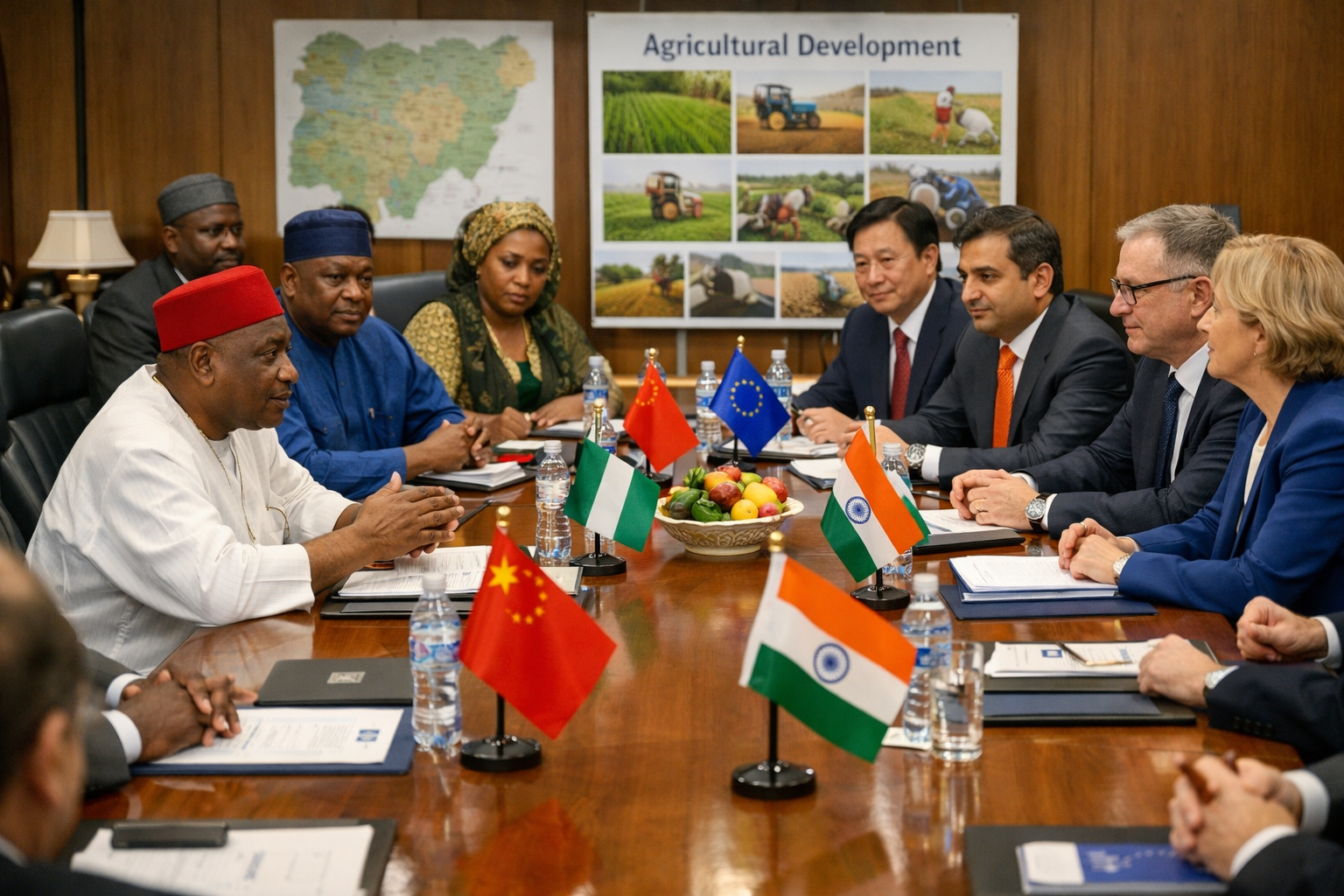
Senate Pushes for International Collaboration to Boost Nigeria’s Agricultural Sector
In a strategic move to address Nigeria’s persistent food security challenges and stimulate economic growth, the Nigerian Senate has initiated discussions with key international players, including China, India, and the European Union. The focus of these engagements is to secure support for the revitalization of the nation’s agricultural institutions, which are crucial for modernizing farming practices and increasing output.
The Senate Committee on Agriculture, during a recent plenary session, emphasized the need for foreign technical assistance, investment, and knowledge transfer to transform Nigeria’s agricultural landscape. This initiative aims to move beyond traditional farming methods towards more sustainable and productive approaches. For more insights into Nigeria’s economic challenges, read about how rising fuel costs are impacting Lagosians.
Why International Partnerships?
Nigeria, with its vast arable land and significant agricultural potential, has long struggled to meet its food demands. Experts believe that a lack of modern infrastructure, inadequate research, and limited access to advanced farming techniques have hampered the sector’s growth. By partnering with countries like China and India, known for their agricultural advancements, and the European Union, a major consumer market, Nigeria hopes to bridge these gaps. This collaboration could lead to improved crop yields, better post-harvest management, and enhanced value chains. The importance of strategic partnerships extends to various sectors, including politics, as seen in Atiku Abubakar’s recent lobbying efforts.
Expected Outcomes and Challenges
The Senate anticipates that these partnerships will result in the establishment of modern agricultural research centers, training programs for Nigerian farmers, and the introduction of innovative farming technologies. Such developments are expected to not only boost local food production but also create employment opportunities and increase export revenues. However, challenges such as bureaucratic hurdles, corruption, and ensuring equitable distribution of resources will need to be carefully managed to ensure the success of these initiatives. The government’s commitment to addressing national issues is paramount, as highlighted in discussions around Wike’s comments on governance.
Conclusion
The Nigerian Senate’s proactive engagement with international partners to revive agricultural institutions is a commendable step towards achieving food security and economic diversification. While the road ahead may be challenging, the potential benefits for Nigeria’s economy and its citizens are immense. The success of this initiative will depend on effective implementation, transparency, and sustained commitment from all stakeholders. For continuous updates on national development and policy, keep visiting naira.blog.