

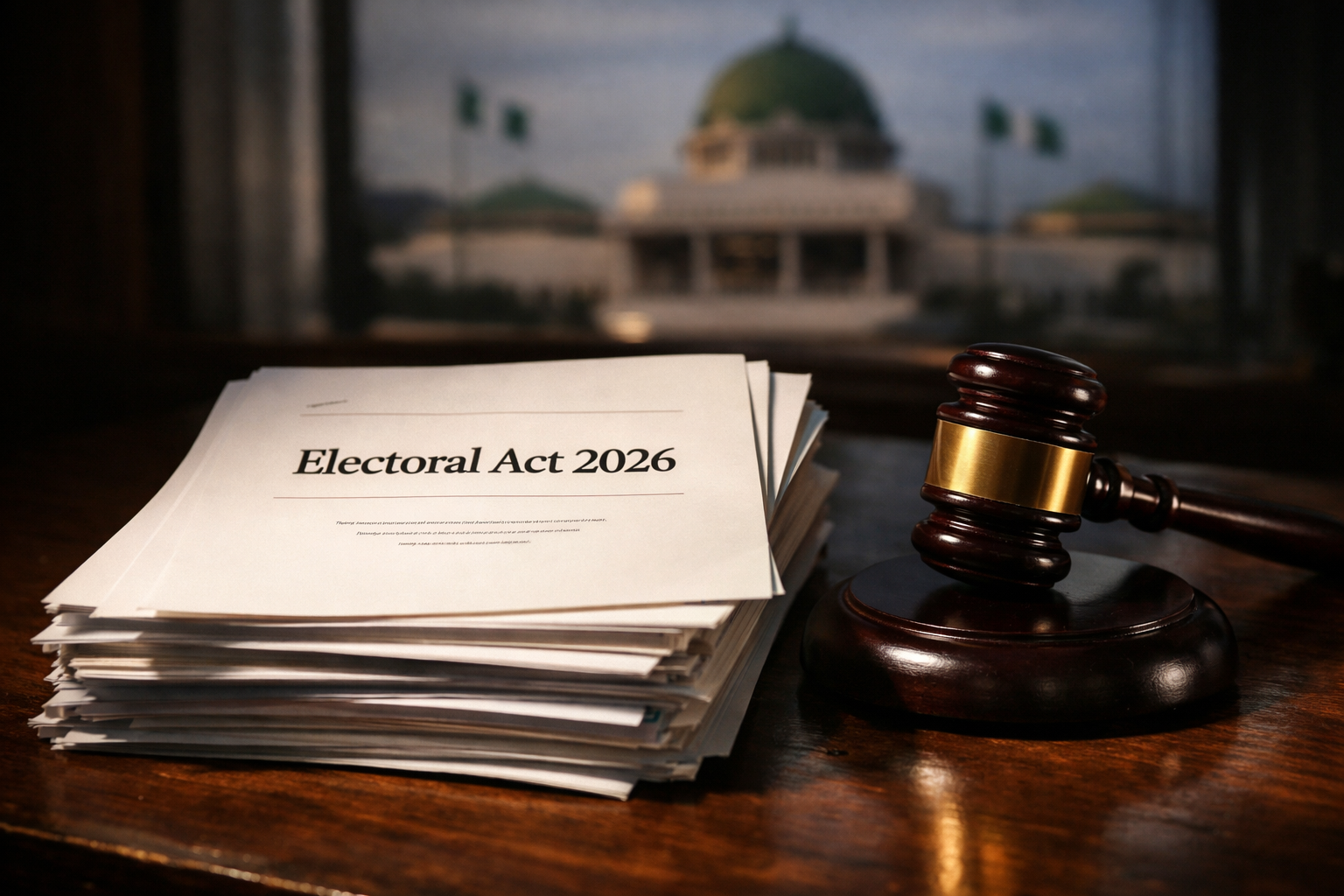
Introduction: A New Law, Old Concerns
The recent assent by President Bola Ahmed Tinubu to the Electoral Act Amendment Bill 2026 was heralded by some as a step towards strengthening Nigeria’s democratic framework. However, the new legislation has quickly become a focal point of controversy, with critics raising serious concerns about its potential impact on the integrity of the upcoming 2027 general elections. The debate primarily centers on certain provisions within the Act that opposition groups and civil society organizations fear could be exploited to manipulate electoral outcomes.
The Heart of the Controversy: Manual Transmission and Trust Deficit
At the core of the current dispute is the National Assembly’s decision to retain manual transmission as a fallback mechanism for election results. While proponents argue this provides a necessary contingency in areas with poor network coverage, critics contend that it opens a wide door for electoral malpractice. The memory of past elections, often marred by allegations of result manipulation during manual collation, fuels this apprehension.
Opposition parties and civil society groups have vociferously argued that relying on manual transmission, even as a fallback, undermines the transparency and credibility that electronic transmission was intended to bring. They fear that this provision could be strategically used to alter results, especially in closely contested elections, thereby eroding public trust in the electoral process.
Legal Tussle Looms: A Battle for Electoral Justice
The controversy surrounding the Electoral Act 2026 is not merely a political debate; it is rapidly escalating into a potential legal battle. Reports suggest that various stakeholders are preparing to challenge certain aspects of the Act in court, seeking judicial interpretation and intervention to safeguard the sanctity of the electoral process. This looming legal tussle highlights the deep divisions and mistrust that persist regarding electoral reforms in Nigeria.
The outcome of these potential legal challenges will be crucial. A favorable ruling for the critics could force amendments to the Act, while a ruling in favor of the current provisions would likely intensify calls for vigilance and accountability during the 2027 elections. The judiciary, once again, finds itself at the epicenter of a critical national discourse.
Implications for the 2027 General Elections
The implementation of the Electoral Act 2026 will undoubtedly shape the landscape of the 2027 general elections. The concerns raised by critics suggest that the path to free and fair elections remains fraught with challenges. The ability of INEC to navigate these controversies, uphold its independence, and ensure transparent processes will be under intense scrutiny.
Furthermore, the debate over the Act underscores the ongoing struggle for genuine democratic reforms in Nigeria. It emphasizes the need for continuous engagement between political actors, civil society, and the electorate to build a consensus on electoral frameworks that truly reflect the will of the people. The coming months will be a critical test for Nigeria’s commitment to democratic principles.
Conclusion: A Critical Juncture for Nigeria’s Democracy
The Electoral Act 2026, despite its intended purpose of strengthening democracy, has become a source of significant contention. The debate over manual transmission and the looming legal challenges underscore the fragility of electoral trust in Nigeria. As the nation prepares for the 2027 general elections, all eyes will be on how these controversies are resolved and whether the new Act will ultimately serve to enhance or undermine the integrity of the democratic process. The commitment of all stakeholders to transparency, fairness, and the rule of law will be paramount in ensuring that the will of the Nigerian people prevails.
Read Also: History of Electoral Reforms in Nigeria
Read Also: Role of Civil Society in Elections
Read Also: Judicial Intervention in Electoral Matters
Read Also: 2027 Election Preparations
Read Also: Building Trust in Nigerian Elections