
Introduction: A Political Figure Under Scrutiny
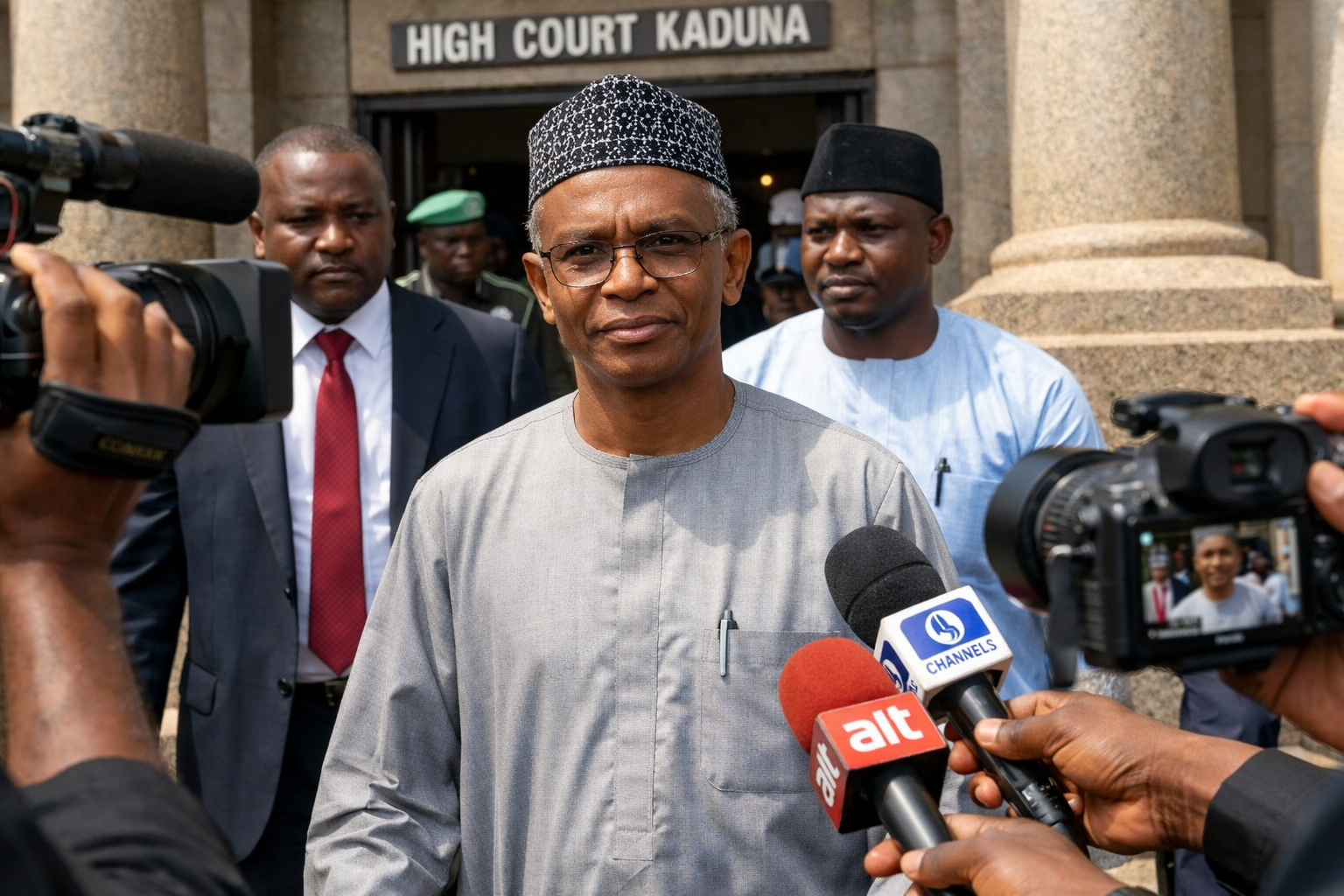
Former Kaduna State Governor, Nasir El-Rufai, once again found himself in the spotlight as he appeared before the Kaduna High Court for his ongoing trial by the Independent Corrupt Practices and Other Related Offences Commission (ICPC). The trial, which centers on allegations of fraud and abuse of office during his tenure as governor, has kept the political class and the public keenly watching. However, it was his remarks outside the courtroom, particularly concerning the African Democratic Congress (ADC) convention, that added another layer of intrigue to his public appearance.
The ICPC Trial: Allegations of Fraud and Abuse of Office
El-Rufai is facing a nine-count charge brought against him by the ICPC. These charges relate to alleged financial impropriety and abuse of his official position during his time as the chief executive of Kaduna State. The trial has been a protracted affair, with legal proceedings often drawing significant media attention due to El-Rufai’s prominent political standing.
The outcome of this trial holds considerable weight, not just for El-Rufai personally, but also for the broader fight against corruption in Nigeria. A conviction would send a strong message about accountability, while an acquittal would clear his name and potentially pave the way for future political endeavors.
“I’ll Be There in Spirit”: El-Rufai on the ADC Convention
Amidst the legal proceedings, El-Rufai was questioned by journalists about the recent ADC convention. His response, stating he would “be there in spirit,” has sparked various interpretations. While seemingly a lighthearted remark, it could also be seen as a subtle indication of his continued interest and influence in political happenings, even while facing legal challenges.
This comment comes in the context of recent political realignments and discussions surrounding the ADC’s role in the upcoming 2027 elections. El-Rufai’s past political associations and his reputation as a shrewd political strategist make any statement from him, however brief, a subject of political analysis.
Accusations Against Kaduna Police: A Constitutional Breach?
Adding to the day’s events, El-Rufai also leveled accusations against the Kaduna police, alleging that they violated the constitution by summoning him over an ADC meeting. This claim introduces a new dimension to the narrative, suggesting potential political interference or overreach by law enforcement agencies.
Such accusations, especially from a former governor, are serious and warrant investigation. They highlight ongoing concerns about the independence of state institutions and the protection of civil liberties in the political sphere. The interplay between political activities, legal processes, and law enforcement actions remains a complex and often contentious aspect of Nigerian governance.
Conclusion: A Day of Legal and Political Intrigue
Nasir El-Rufai’s recent court appearance was a confluence of legal battles and political commentary. His ongoing ICPC trial keeps the focus on accountability, while his remarks on the ADC convention and accusations against the Kaduna police underscore the dynamic and often turbulent nature of Nigerian politics. As these events unfold, they continue to shape public perception and contribute to the broader discourse on governance, justice, and democratic practice in the nation.
Read Also: Corruption Trials in Nigeria
Read Also: Role of ICPC in Nigeria
Read Also: ADC Party History and Influence
Read Also: Kaduna State Political Landscape
Read Also: Nigerian Legal System and Politics