

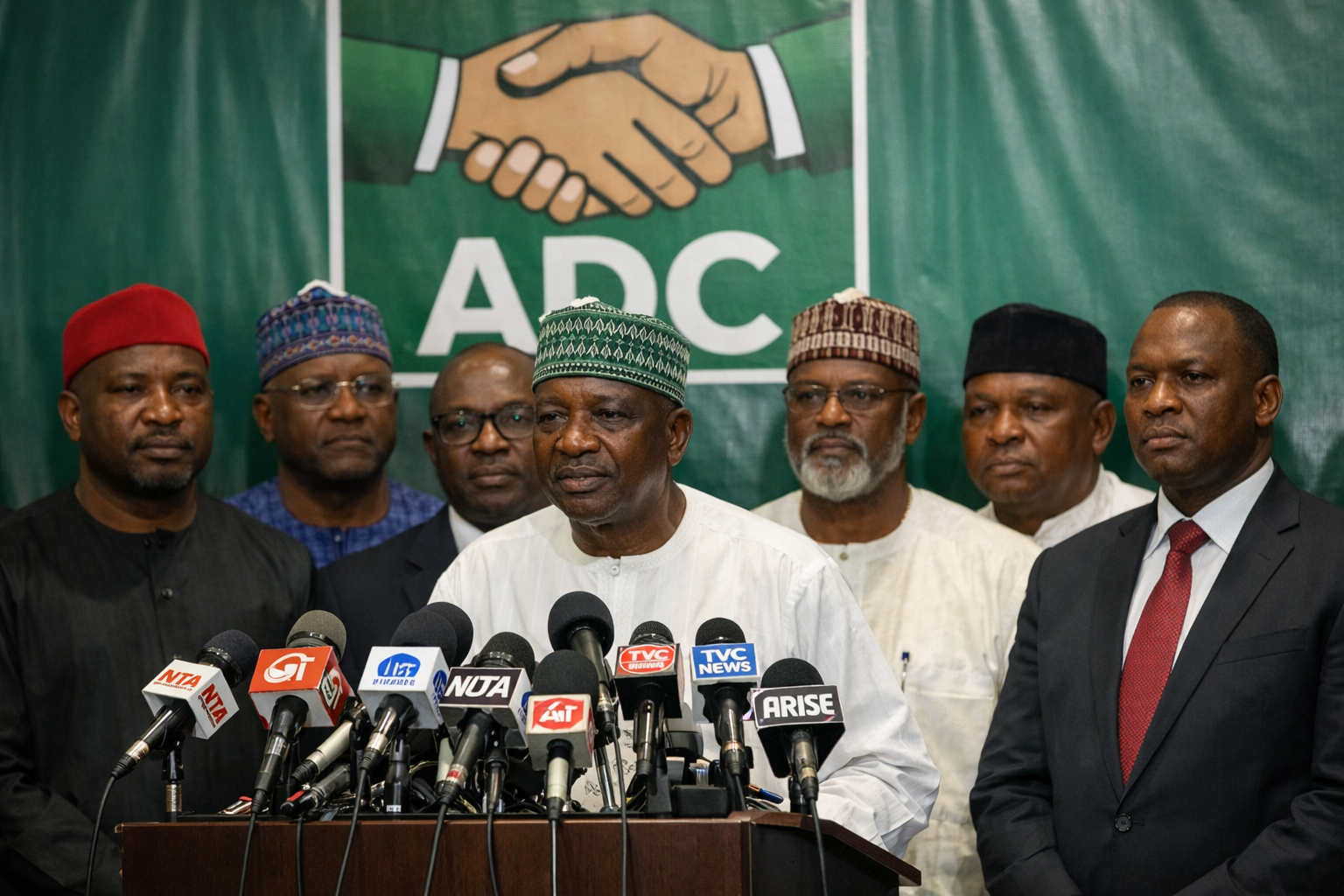
The internal crisis rocking the African Democratic Congress (ADC) has taken a new and more complex turn. On Tuesday, a third faction emerged, further splintering the party as it struggles to maintain its identity and prepare for the 2027 general elections. This latest development comes at a time when the party is already grappling with legal battles and internal accusations of betrayal.
A Three-Way Split: The New Caretaker Committee
Led by a bloc of state chairmen, the new faction has announced the formation of its own caretaker committee, effectively disowning the leadership of both David Mark and Nafiu Bala. This move has thrown the party into a state of total confusion, with each faction claiming to be the legitimate authority within the ADC. The leadership struggle is not just about control of the party’s machinery, but also about the strategic direction the party will take as it seeks to position itself as a viable alternative to the ruling APC.
Allegations of External Interference
The crisis has been fueled by allegations of external interference, with some members accusing the ruling All Progressives Congress (APC) and President Bola Tinubu of attempting to weaken opposition parties. These claims were recently echoed by Aisha Yesufu, who alleged INEC bribery in the ADC leadership tussle. The emergence of a third faction only serves to bolster these concerns, as a divided opposition is less likely to mount a credible challenge in the upcoming elections.
The Role of INEC in the ADC Crisis
The Independent National Electoral Commission (INEC) finds itself at the center of this political storm. The commission has been called upon by various factions to clarify the legal status of the party’s leadership. Recently, the ADC youth wing issued a 72-hour ultimatum to INEC, demanding a definitive statement on which faction is recognized by the electoral body. Without clear guidance from INEC, the party remains in a state of legal and administrative limbo.
Implications for the 2027 General Elections
As the ADC continues to implode, other political actors are closely watching. There are already talks of a potential realignment, with the New Nigeria People’s Party (NNPP) and other opposition groups inviting ADC members to join forces. The latest Nigerian politics on naira.blog suggests that if the ADC cannot resolve its internal disputes, it may cease to be a significant player in the 2027 race, leaving its members to seek shelter under other political platforms.
Conclusion
The ADC leadership crisis is a stark reminder of the challenges facing opposition politics in Nigeria. For a party that once held so much promise as a third force, the current state of fragmentation is a significant setback. Whether the party can reconcile its warring factions or will eventually dissolve into smaller, less influential groups remains to be seen. One thing is certain: the road to 2027 is becoming increasingly complicated for the ADC.